
Some snacks shout for attention. Tutu kueh just steams quietly and lets the smell do the work. A puff of vapor rises, a little white dome appears on a square of pandan leaf or banana leaves, and you suddenly remember you wanted a snack all along.
To me, tutu kueh is one of the most underrated treats in Singapore's traditional food heritage. It's small, gentle, and a little old-fashioned, and there's real craft packed into every bite. Here's why the peanut version in particular is worth slowing down for.
A Small Cake With a Soft Heart
What You're Actually Biting Into
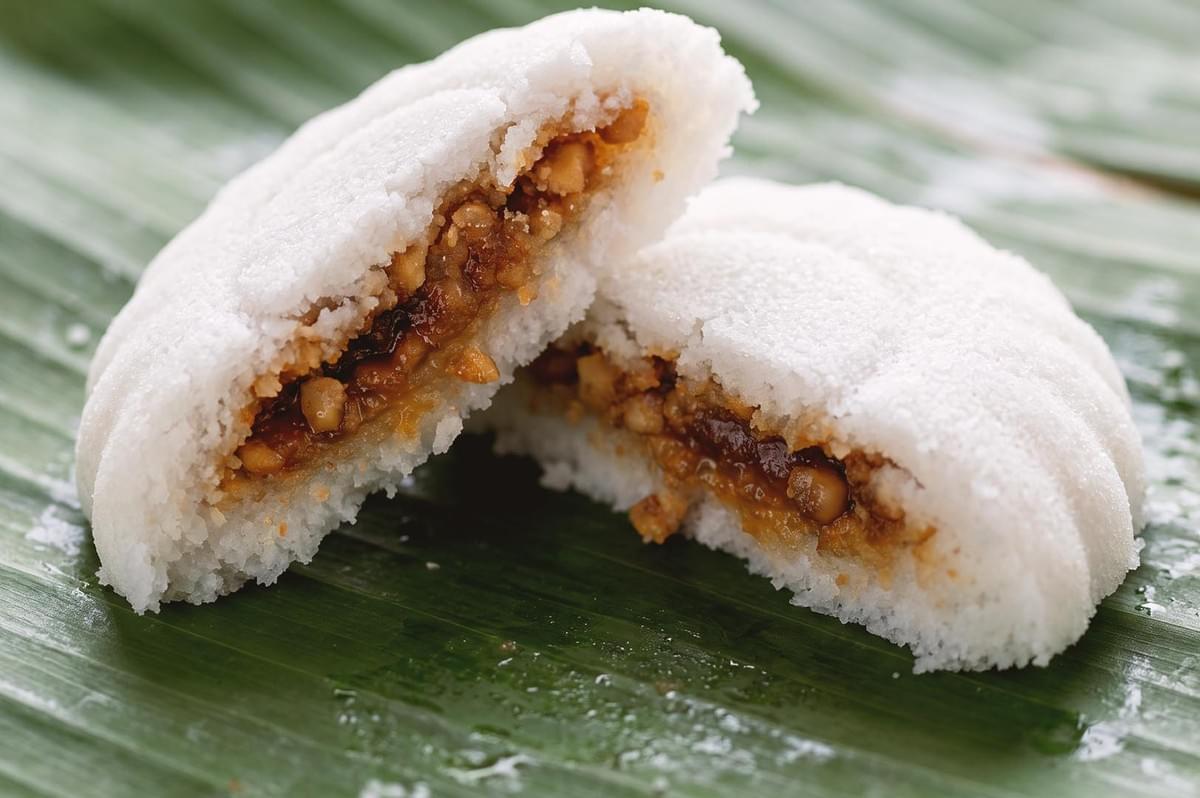
Tutu kueh is a steamed cake made from a carefully prepared rice flour mixture, shaped in a small, flower-edged mold and filled with something sweet. Some versions are close to bite-sized, and others take two or three nibbles. The outside is pale, soft, and slightly crumbly. It isn't chewy like mochi or springy like a sponge cake. It's more delicate, almost powdery, and it gives way the moment your teeth touch it.
Then you reach the middle. The peanut version usually combines ground roasted peanuts with sugar, while coconut versions are commonly sweetened with gula melaka. It's nutty, a little toasty, and lightly sweet, with a slight grit that contrasts nicely with the soft shell around it.
The Pandan and Banana Leaves Underneath
Each cake is commonly served on a small piece of pandan leaf. The leaf does more than keep the cake from sticking. Its grassy, vanilla-like aroma drifts up with the steam, so the first thing you notice is the smell, before the cake is even in your hand. The pandan doesn't overpower anything. It works in the background and makes the whole thing feel fresh.
Why Fresh Matters So Much
Here's my one firm rule about tutu kueh: eat it warm, and eat it soon.
Fresh from the steamer, the rice flour shell is tender and fluffy, and the peanut filling is fragrant and loose. Let it sit too long and the shell can dry out or turn dense, and the aroma fades. That's a big part of why people are willing to stand and wait at a tutu kueh stall, especially on busy Saturdays and Sundays. You're not only queuing for the cake. You're queuing for the cake at its best while it is still warm.
Honestly, a warm piece with that peanut center is quite shiok. It's comforting in a quiet way, the kind of snack you finish and then immediately think about getting another.
How Tutu Kueh Is Made
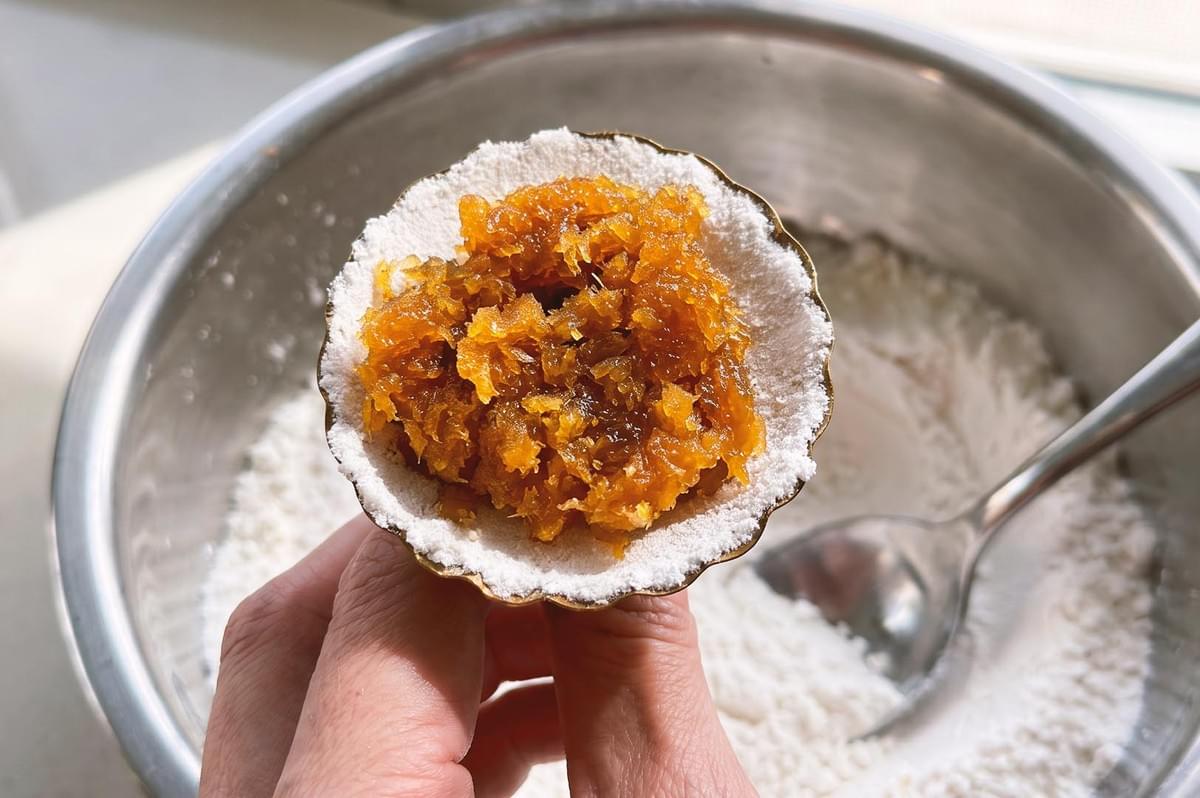
Watching tutu kueh being made is half the charm. The process is simple to describe and much harder to do well. A typical stall, like Tan's Tutu, follows these basic steps:
- Preparing the rice flour mixture: The flour is roasted over medium heat with pandan leaves to remove the raw taste, then cooled and sieved for a fine, sandy texture.
- Mixing: Salt and water are added bit by bit to the cooled flour, then the mixture is rested to absorb moisture fully.
- Filling the mold: The hawker spoons loose rice flour mixture into a small mold.
- Making room for the filling: A small well is pressed into the flour, and the peanut filling or gula melaka coconut filling goes in.
- Sealing it in: More flour mixture is added on top and gently pressed and leveled so the filling is fully enclosed.
- Steaming: The mold is covered with a muslin cloth and placed over a steamer, where the steam sets the flour into a soft cake in a short time.
- Unmolding: The cake is turned out onto its piece of banana leaf, ready to serve.
The Art of the Press and Cooking
The hand-pressing step is where skill really shows. Press too hard and the cake turns dense and heavy. Press too lightly and it may crumble or fall apart when it comes out of the mold. A good hawker develops a feel for it over thousands of repeated repetitions, packing the flour just enough for the cake to hold its shape while staying light.
Steaming is done over medium heat. Covering the cakes with a cloth during cooking helps retain moisture and prevents them from drying out.
The Molds and Community

Tutu kueh moulds give the cakes their familiar flower-like edges. Tutu kueh is traditionally shaped in small flower-edged moulds, including tin or other metal moulds. Tan’s Tutu Coconut Cake was one of Singapore’s best-known heritage tutu kueh businesses, and its closure in 2025 underscored how fragile this craft has become.
What Makes a Great Piece
When I think about what makes a tutu kueh worth seeking out, it comes down to a few things:
- A soft, airy shell that breaks apart easily without feeling dry or chalky
- Fragrant peanuts or gula melaka coconut filling that tastes properly roasted or caramel-sweet
- Balanced sweetness, so the peanut or coconut flavor comes through instead of plain sugar
- A generous filling that reaches across the cake instead of hiding in one small pocket
- A clear pandan or banana leaf aroma that you can smell before you take a bite
- Freshness, steamed to order or very close to it
If a stall gets all of these right, that's worth a short queue.
Peanut and Its Neighbor: The Coconut Filling
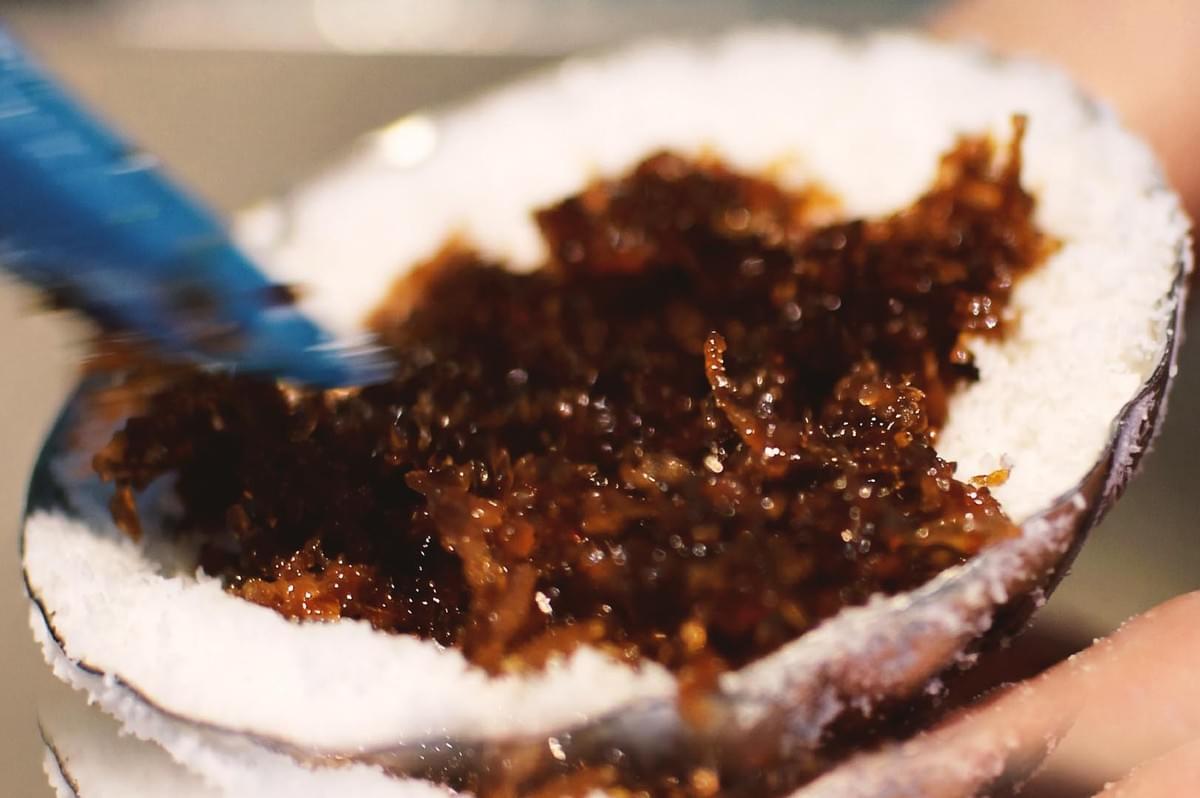
Most tutu kueh stalls also offer a coconut filling, usually grated coconut cooked with gula melaka and a pinch of salt. It's moist, a little chewy, and caramel-sweet. Many people buy a mix of both, and some households will happily argue over which one is better.
For me, peanut holds its own because of the contrast. The dry, nutty crunch next to the soft rice flour gives each bite more texture. The coconut version is lovely, but the peanut one has a toasty warmth that's hard to beat on a rainy afternoon.
Tutu Kueh and Putu Piring: A Regional Connection
Tutu kueh is widely regarded as a uniquely Singaporean adaptation of a Hokkien steamed rice cake and was popularised here in the 1930s by Fujian immigrant Tan Yong Fa. It's larger than putu piring, a related steamed rice cake popular among the Singaporean Malay community, especially around Haig Road Putu Piring stalls. Putu piring is traditionally smaller, filled with coconut or peanut, and often featured in Indonesia and Malaysia as well.
A Piece of Hawker Heritage and Business
Tutu kueh is a fading kind of hawker craft. It's slow, repetitive, made by hand, and best eaten on the spot. Snacks like this survive only if people keep showing up for them. Tan's tutu business is a shining example of success in preserving this culinary tradition and fostering community love.
A Note on Stalls and When to Visit
Many tutu kueh stalls operate on Saturdays and Sundays, when the community comes out to enjoy these treats fresh. If you want to experience the best, it's wise to read recent listings or check social media for hours and locations before you go.
Join the Queue
Next time you spot a small steamer and a tray of banana leaves at a near market and food hawker center or pasar malam, stop for a moment. Order a few peanut ones, eat at least one right away while it's warm, and pay attention to the soft crumble of the shell and the toasty filling.
Then help keep the tradition going. Tell a friend, bring your kids, or share your favorite stall with someone who has never tried tutu kueh. These little cakes have lasted this long because people kept queuing for them, and they're worth queuing for.
