
The first time I really noticed chrysanthemum tea, I was eight, maybe nine. My grandmother had a big pot of chrysanthemum flower tea sitting on the kitchen counter, that pale yellow golden hue catching the afternoon light through the window grilles. I remember reaching for it thinking it was some kind of syrup drink, and she just laughed and poured me a cup. Cold, gently sweet, with this soft floral flavor similar to fresh flowers I couldn't name yet. I didn't know then that I'd still be drinking chrysanthemum tea thirty years later.
We drink a lot of this herbal tea in Singapore. It sits quietly in the corner of almost every coffee shop chiller, next to the barley and the soya bean, easy to overlook. But I think that's exactly why it deserves a bit more attention. This is a flower tea that has been keeping us company for generations, and most of us hardly stop to think about it.
So let me talk about drinking chrysanthemum tea properly for once.
Where Chrysanthemum Tea Comes From: The Chrysanthemum Plant and Chinese Medicine
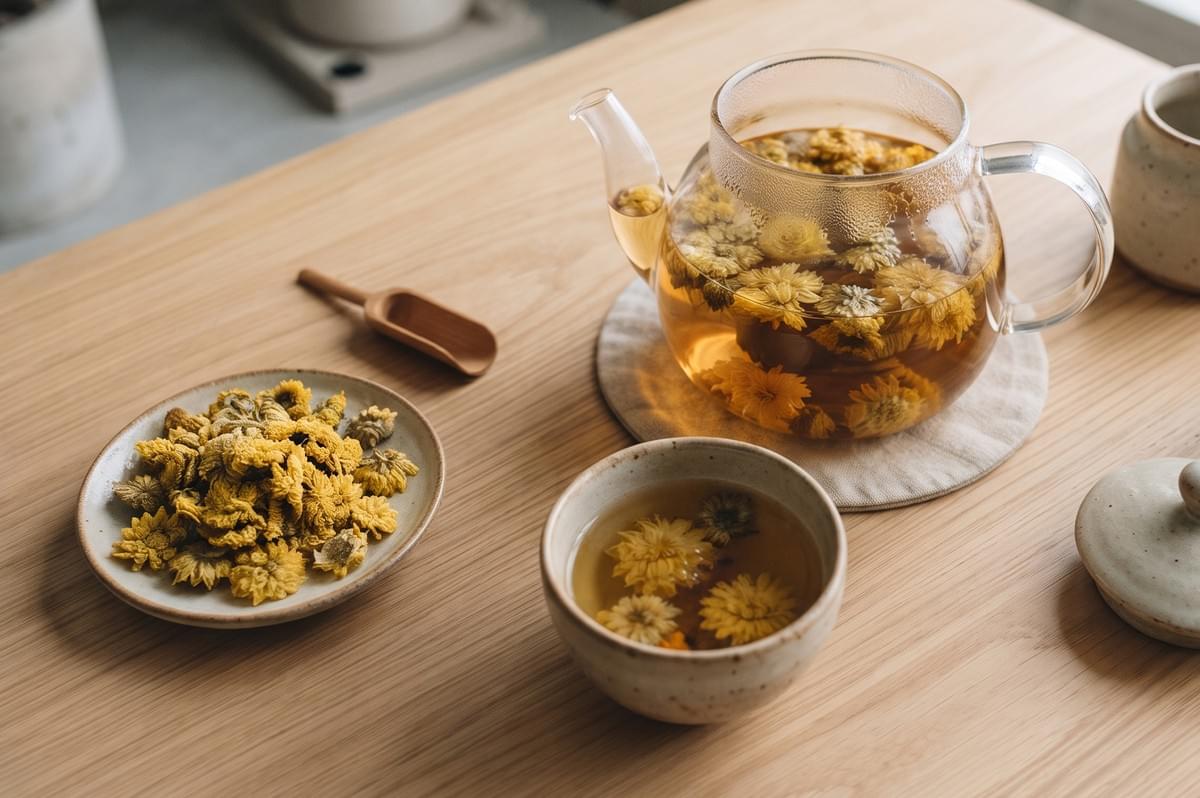
Chrysanthemum tea isn't actually tea, if we want to get technical. There are no tea leaves in it. It's an herbal infusion made from dried chrysanthemum flowers, usually from the chrysanthemum morifolium or chrysanthemum indicum species, steeped in boiling water until the color deepens into that familiar amber gold or pale yellow hue.
The chrysanthemum plant has deep roots in East Asia, especially in China, where it has been cultivated since the Song Dynasty (960–1279 AD). It travelled here with migrants who built much of our food heritage, becoming part of everyday Singaporean tables. You'll find it at Chinese restaurants, hawker centres, wedding dinners, and in flasks carried around like a national treasure. Which, honestly, it kind of is.
In traditional Chinese medicine and Chinese dietary herbal medicine, chrysanthemum has always carried meaning beyond just flavor. It shows up in poetry, paintings, and the idea of quiet resilience because the flower blooms late in the year when others have faded. There's a gentleness to it that comes through in the cup.
The Medicinal Benefits and Health Benefits of Chrysanthemum Tea in Traditional Chinese Medicine
Drinking chrysanthemum tea offers a range of medicinal benefits recognized in Chinese medicine and integrative medicine. The chemical composition of chrysanthemum flowers includes high concentrations of antioxidant content, beta carotene, vitamin C, and vitamin B, contributing to its anti inflammatory effects and health benefits.
Chrysanthemum tea benefits include lowering blood pressure and cholesterol levels, promoting better blood flow and heart health, and supporting a healthy immune system. The potassium in chrysanthemum tea helps regulate blood pressure, making it valuable for those managing high blood pressure and heart disease risks.
Traditional Chinese medicine uses chrysanthemum flower tea to clear heat and toxins from the body, soothe sore throat and dry mouth, relieve early stages of cold symptoms, and promote eye health by alleviating dry eyes and eye strain. It also has a calming effect that promotes deep relaxation and helps balance body constitution.
However, caution is advised for those with allergies to daisies or who take prescription medications like statins, as chrysanthemum may cause skin irritation or interact with medications.
What Drinking Chrysanthemum Tea Actually Tastes Like: A Naturally Caffeine Free Herbal Tea

If you've never paid close attention, here's what you're drinking.
- Aroma: Light and floral, with essential oils that give a soft, flowery flavor similar to fresh flowers on a warm day, never heavy or perfume-like.
- Colour: A clear golden hue or pale yellow, depending on how long the tea is brewed or steeped.
- Taste: Softly sweet, especially when sweetened with rock sugar or honey, slightly earthy underneath, with a clean finish that doesn't linger too long.
- Feeling: Cooling and calming, the kind of drink that settles you rather than wakes you up, perfect for those who want to avoid caffeine.
Some people add goji berries or other herbs to enhance the flavor and medicinal benefits. The flower buds and flower heads used in the tea provide a delicate floral note that pairs well with spicy Chinese dishes.
In Singaporean traditions, chrysanthemum tea holds a special place beyond just a refreshing drink. It is commonly served during festive occasions and family gatherings, symbolizing longevity and good health. At Chinese wedding banquets and Lunar New Year celebrations, chrysanthemum tea is often offered as a gesture of hospitality and well-wishing.
Many older Singaporeans carry flasks of chrysanthemum tea as a daily tonic to combat the tropical heat and maintain balance in the body according to traditional beliefs. Its presence in hawker centers and kopitiams across the island also reflects its role as a comforting, everyday beverage that connects generations through shared cultural heritage.
This tea embodies a quiet but enduring aspect of Singapore’s rich Chinese culinary tradition, blending health, history, and hospitality in every cup.
How to Make Chrysanthemum Tea: Brewing the Perfect Cup of Flower Tea
Making chrysanthemum tea is simple and rewarding, allowing you to enjoy its delicate floral aroma and soothing flavor at home. Here's how to make chrysanthemum tea:
Use 3 to 6 dried chrysanthemum flowers or flower buds per flowers serving. Place them in a teabag, tea strainer, or directly in a teapot. Boil 3 cups of water and pour boiling water over the dried flowers. Let the tea steep for 3 to 5 minutes to extract the full flavor and medicinal benefits.
The tea brewed will have a golden hue and a naturally caffeine free, gentle floral taste. You can sweeten it with rock sugar or honey if desired. The dried flowers can be reused for 2 to 3 more batches, although the flavor will be lighter.
Chrysanthemum tea can be enjoyed hot or cold. For a refreshing iced version, brew the tea hot, let it cool, then add cold water and ice cubes.
When and Why We Reach for Chrysanthemum Tea: A Herbal Tea for Wellness Routine and Deep Relaxation
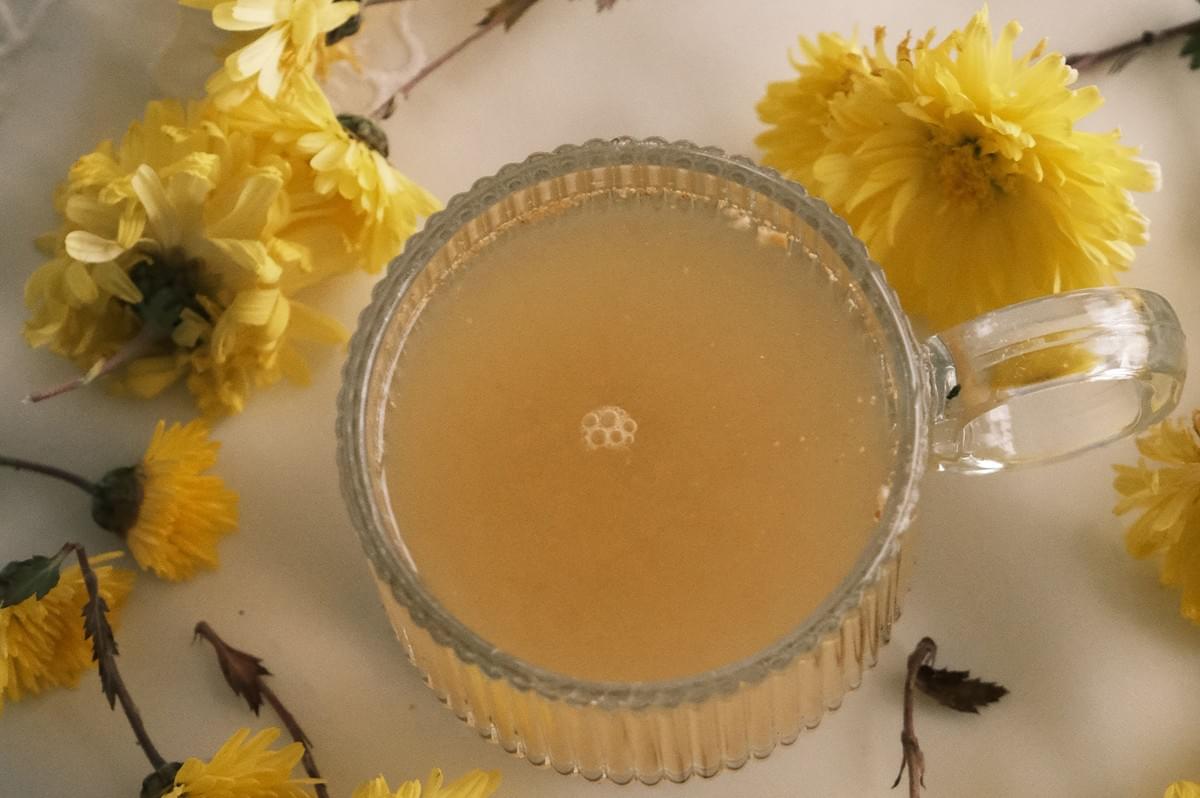
There's a rhythm to drinking chrysanthemum tea in daily life.
On a hot day
Singapore heat doesn't play. When the sun is beating down, an iced chrysanthemum tea from the coffee shop hits differently. It's not as sharp as a soft drink, not as heavy as bandung. Just cool, clean, and a little sweet. Steady.
After a big, oily meal
This is where it earns its place at the table. Following a plate of char kway teow or roast meats, that gentle floral cup feels like it resets your palate. In Chinese tradition, chrysanthemum tea is considered a "cooling" drink, something people turn to when they feel a bit "heaty" after fried and rich food.
When you need to slow down
Some evenings I want something warm that isn't coffee or traditional tea keeping me up. A cup of hot chrysanthemum tea, caffeine free and calming, is the drink equivalent of taking a deep breath. It promotes deep relaxation and helps soothe stress.
The Food Chrysanthemum Flower Tea Loves: Perfect Pairings for a Balanced Meal
Chrysanthemum tea is a generous partner at the table. It doesn't compete with your food, it makes room for it.
It goes beautifully with:
- Dim sum, where its lightness cuts through steamed and fried parcels.
- Roast meats and char siew, balancing richness and fat.
- Spicy hawker dishes, offering a cool, calming counterpoint to the heat.
- Home-cooked comfort food, like steamed fish and rice on a quiet night.
Worth Noticing Again: The Timeless Charm and Anti Inflammatory Effects of Chrysanthemum Tea
Chrysanthemum tea is so ordinary in our lives that we've almost stopped seeing it. It sits in the background of countless meals, poured without ceremony, finished without comment. But when I stop and taste it, I remember why it has stayed with us for so long.
It's not trying to be trendy. It's honest, gentle, and rooted in Chinese medicine and tradition older than any of us. That golden cup carries my grandmother's kitchen in it, and probably somebody's grandmother in yours too.
So next time you're at the coffee shop or a family dinner, don't just reach for the usual. Order chrysanthemum tea. Let it cool your afternoon or round off your meal. Brew a pot at home this weekend and notice how the whole kitchen softens with that smell.
Tea is better when having a lunch, and what better way to enjoy your cup of tea with the perfect Lunch Break Worth Taking in Singapore
