
The first time someone put a bowl of Thunder Tea Rice in front of me, I wasn't sure whether to eat it or water a plant with it. There it was, a mound of steamed rice, either white rice or brown rice, buried under a small forest of finely chopped vegetables like mustard greens, choy sum, kai lan, long beans, french beans, and green beans, with a jug of murky green soup sitting beside it like a science experiment.
I remember thinking, so this is the famous Lei Cha (擂 茶), and quietly wondering how I was supposed to enjoy something that looked like it belonged in a garden, not a humble stall at a food centre.
That was years ago. These days, I find myself going back for this traditional Hakka dish more often than I ever expected. And the funny thing is, the more I ate it, the more I started asking questions. Where did this bowl come from? Why did so many of us dismiss it? And how did it quietly turn into one of the most underrated signature dishes in Singapore?
So, What Exactly Is Thunder Tea Rice and Hakka Thunder Tea Rice?
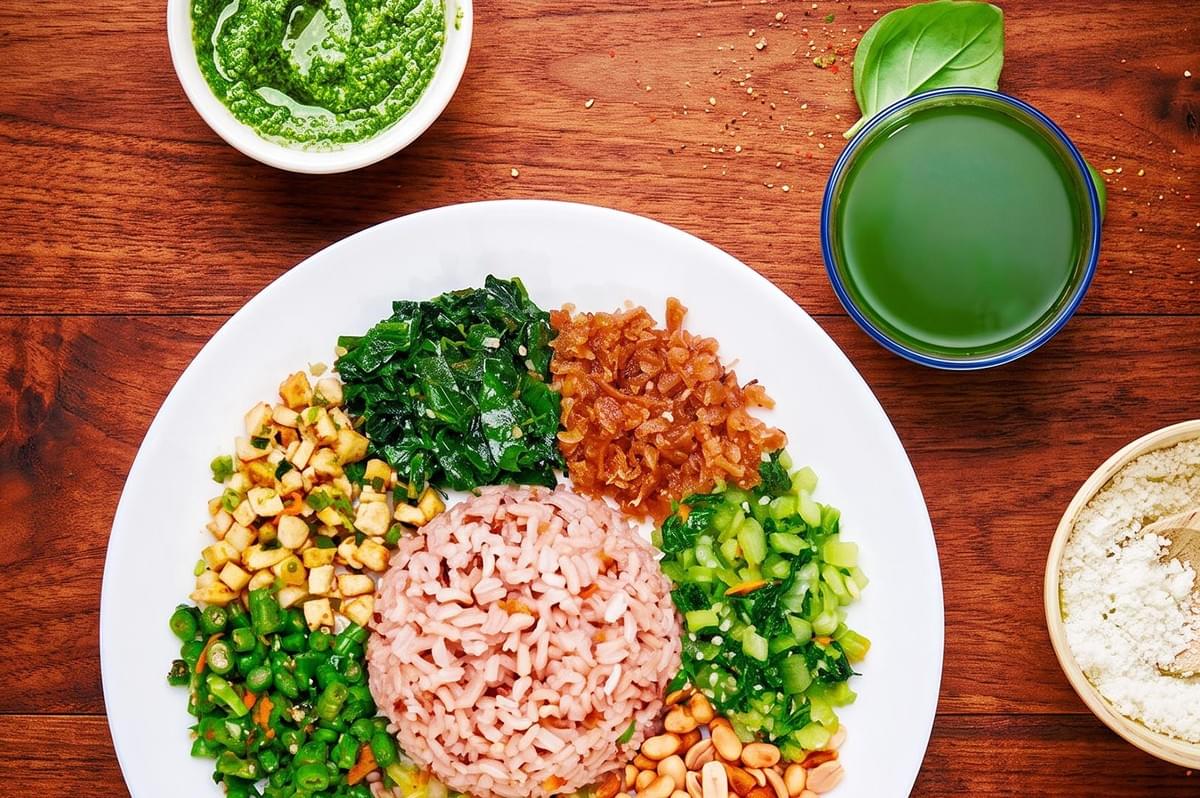
Thunder Tea Rice, also known as Hakka Lei Cha or Hakka Thunder Tea Rice, is a traditional Hakka dish built around two parts: a bowl of white or brown rice topped with an assortment of veggies, tofu, nuts, and herbs, and a separate jug of herbal lei cha soup made from tea paste.
The tea paste is a blend of chinese tea leaves, roasted peanuts, sesame seeds, ground peanuts, basil, mint, and other fresh ingredients, pounded or blended into a thick, slightly creamy green tea soup.
The name always intrigued me. "Thunder" sounds dramatic for something so wholesome, right? I later realised the "lei" in Lei Cha refers to the pounding action used to make the tea base, grinding herbs, tea leaves, nuts, and seeds into a thick paste. Say it fast enough and it sounds a bit like rolling thunder. No lightning bolts involved lah, just a lot of patient pounding.
A typical bowl usually includes:
- Steamed rice (white rice or brown rice) as the base
- Finely chopped vegetables such as mustard greens, choy sum, kai lan, long beans, french beans, green beans, cabbage, cai xin, and chye sim
- Fried tofu or tau kwa, pan-fried until golden brown
- Roasted peanuts and sesame seeds
- Preserved radish or pickled radish (chye poh) for that salty kick
- Dried shrimp or ikan bilis for umami (optional, making it vegetarian friendly if omitted)
- Fresh herbs like basil and mint
- The herbal green soup (lei cha soup) poured over the top just before eating
Every stall does it slightly differently, which is part of the fun. Some add black eyed peas or yong tau foo as toppings. Some use a secret recipe for their tea paste or add garlic and other herbs to enhance the flavor. You start noticing these little signatures once you've tried a few.
The Hakka Lei and Traditional Hakka Lui Cha Story Behind the Bowl
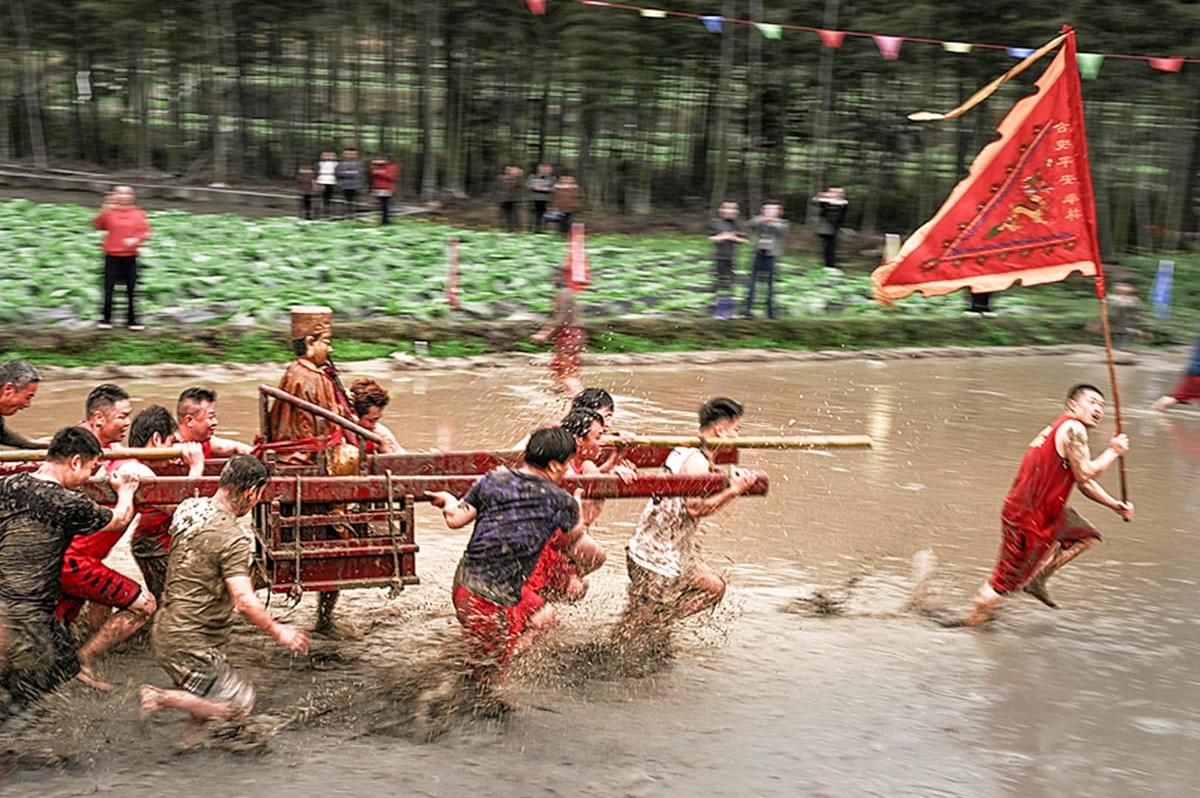
What really pulled me in was the history. Thunder Tea Rice is a traditional Hakka dish, and the Hakka people are often described as wanderers, communities that moved and resettled across generations. Their food had to be practical, filling, and able to make the most of all the ingredients they could grow or forage.
That context changed how I saw the bowl. This wasn't invented to be trendy. It was survival food that happened to be deeply nourishing with health benefits like high fiber and antioxidants from the tea leaves and herbs.
When I eat it now, I think about all those hands, over all those years, grinding herbs and gathering vegetables to feed a family. There's something quietly moving about that. A traditional Hakka dish carrying so much memory in one humble bowl.
Why We Used to Say "Too Green, Cannot" About Lei Cha Fan
Let me be honest. For the longest time, plenty of Singaporeans, myself included, brushed off Thunder Tea Rice as boring health food. "Eh, like eating grass," a friend once said, and we all laughed and went for chicken rice instead.
I get why. The color alone confirms nothing indulgent. No glistening char siew, no rich gravy, no fried anything. Compared to the loud, savoury heavyweights of our hawker scene, Lei Cha looked shy and a little too virtuous. It felt like the dish your auntie recommends when she wants you to eat healthier, not the one you crave at 8pm.
So it sat there, a bit misunderstood, waiting for its moment in the food news and food videos spotlight.
The Quiet Comeback of Lei Cha and Thunder Tea at Food Centres
That moment, I noticed, has arrived. Somewhere along the way, more Singaporeans started looking for wholesome, plant-forward meals that didn't feel like punishment. And here was Thunder Tea Rice, sitting in the corner of the food centre the whole time, already ticking every box.
I realised the revival wasn't about reinventing the dish. It was about the rest of us finally catching up to it. As healthy hawker food in Singapore became something people actively searched for, Lei Cha stopped looking like penance and started looking like a smart, satisfying choice.
Stalls at places like Tanglin Halt Food Centre, Fortune Centre, and Rail Mall have become popular spots for this traditional Hakka lei cha fan, serving large bowls filled with fresh ingredients, fried tofu, preserved radish, and a generous pour of green soup made from tea paste.
The Part Nobody Tells You: It Actually Tastes Shiok
Here's what changed my mind for good. The eating experience.
Pouring the Lei Cha Soup Made from Tea Leaves and Tea Paste
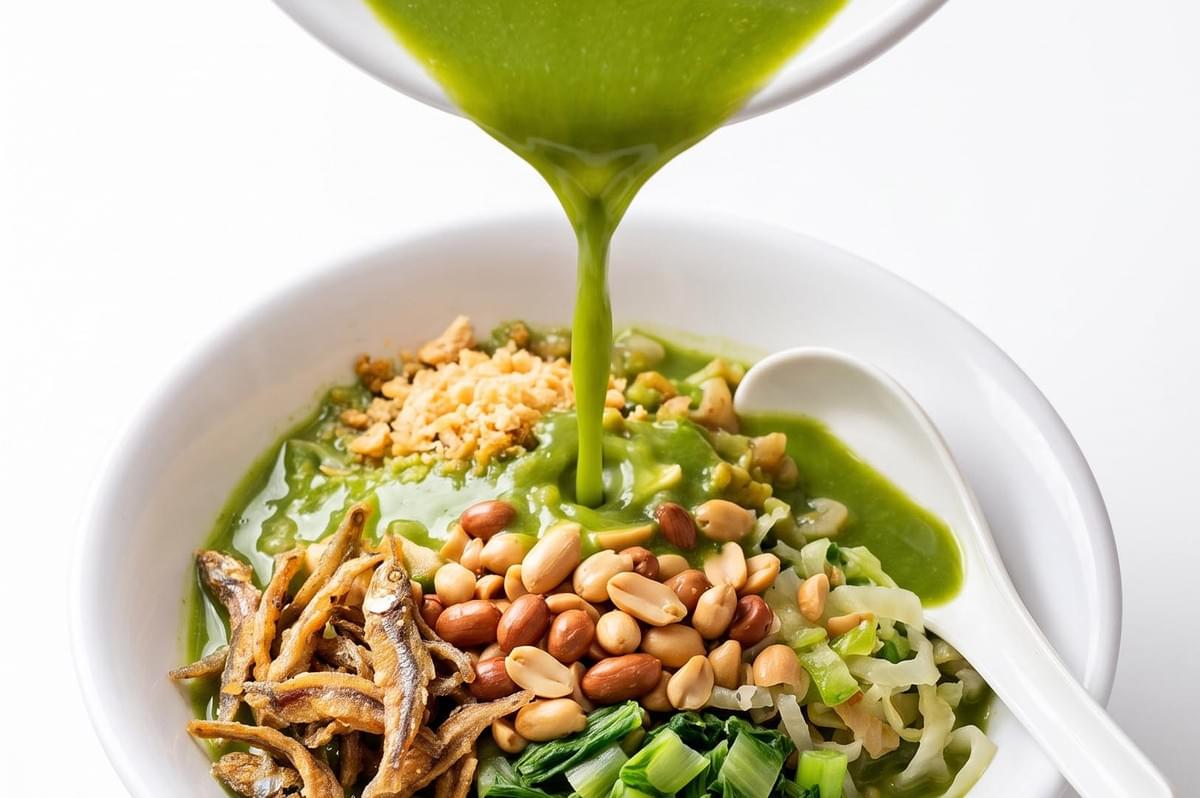
There's a small ritual to it. You lift the jug of warm, herbal green soup and pour it slowly over the rice and veggies. The aroma hits first, this earthy, grassy, slightly minty steam that rises up and honestly smells like calm. I found myself pausing just to breathe it in.
The Texture Play with All the Ingredients
Then comes the mix. When you stir everything together, every spoonful becomes a little adventure:
- The soft warmth of steamed rice
- The gentle crunch of roasted peanuts and sesame seeds
- The salty, chewy bite of preserved radish and pickled radish
- The freshness of the chopped veggies like mustard greens, chye sim, and cai xin
- The smooth cubes of fried tofu soaking up the broth
Soft, crunchy, fresh, savoury, all in one mouthful. Don't play play, the texture alone is worth showing up for.
The Flavour That Grows on You: An Acquired Taste
I won't lie. The first few bites can feel unusual, a bit bitter, a bit earthy, very green. But by the third or fourth spoonful, something clicks. The bitterness softens into something nutty and savoury, the herbs open up, and suddenly you understand why people get hooked. It's light, yet it fills you up properly. Clean, but never bland.
Comfort Food, Heritage Food, Clean Eating, All at Once
What I love most is how many things this one bowl manages to be. It's comfort food, warm and grounding after a long day. It's heritage food, carrying traditional Hakka history in every ingredient. And it's genuinely wholesome, the kind of meal that leaves you satisfied instead of sluggish.
Not many dishes pull off all three. Thunder Tea Rice does it without making a fuss, which somehow makes me appreciate it even more.
Give This Signature Dish Another Chance at Your Local Food Centre
If you're someone who wrote off Lei Cha years ago, I'd gently say this: go back and try again. Find a humble stall that grinds their own tea paste, sit down, pour that fragrant green soup over your rice, and give it a proper few bites before deciding.
You might just find, like I did, that Thunder Tea Rice was never boring health food at all. It's a flavourful, textured, deeply comforting Hakka bowl with a story worth tasting. Support the stalls still keeping this tradition alive, bring a friend along, and let them discover it too.
Some meals fill your stomach. This one, confirm, fills a little more than that.
Opening Hours and Where to Find Hakka Thunder Tea Rice and Living Wholesome Vegetarian Options
Many food centres around Singapore, including Tanglin Halt Food Centre, Fortune Centre, and Rail Mall, have stalls serving this traditional hakka lei cha with opening hours typically from morning till evening. For vegetarian friendly options, Living Wholesome Vegetarian is a great choice, featuring brown rice, black eyed peas, fried tofu, sesame seeds, and a slightly creamy lei cha soup made from fresh herbs and chinese tea leaves.
Check local food news and food videos to discover new hawker stalls and secret recipes for this acquired taste.
Discover more traditional food in Singapore through this article we made: Lunch Worth Taking in Singapore: Discover Telok Ayer Food
Enjoy your bowl of Thunder Tea Rice, the true hakka thunder tea rice experience!
