
The auntie at the food centre didn't ask what I wanted. She already knew.
I had been standing there too long, watching her hands move. The big metal bowl. The dark glob of fermented prawn paste sitting at the bottom like something that had been simmering since before I was born. A splash of lime juice, tamarind, and sugar. Then chilli, the works, all going in before she even reached for the fruit and vegetables.
It was a quiet afternoon at an old hawker centre, the kind with cracked tiles and a ceiling fan that does more clacking than cooling. Somewhere behind me, a uncle was reading the newspaper over kopi. The air smelled of roasted peanuts, crushed peanuts, and something sharp and funky that I have come to love.
She tossed everything together with a pair of long chopsticks, fast and sure. Then she sprinkled the ground peanuts on top, almost like an afterthought, and slid the plate across the counter without a word.
That first plate of famous rojak in Singapore is still in my head. So let me tell you about it.
The First Bite of Singapore Famous Rojak
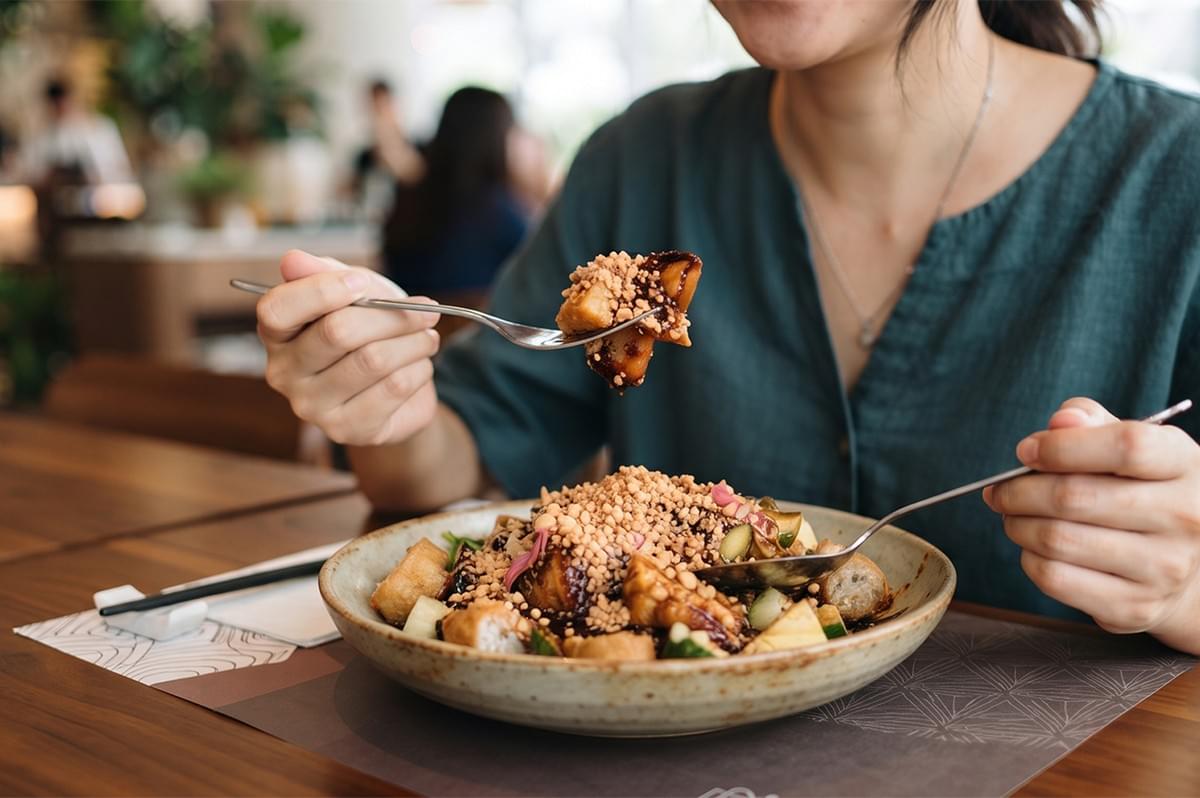
You eat rojak with a toothpick or a small fork, never elegantly. That is part of it.
The first piece I picked up was juicy pineapple, soaked in that special home made rojak sauce. Sweet, then tangy, then a slow heat that crept up from somewhere behind the sweetness. Then the fermented prawn paste hit, savoury and a little funky, and I understood why people get quiet when they eat this.
The next bite was cucumber, cool and crunchy. Then turnip, firm and watery in a good way. Then a piece of fried dough fritters, soft on the inside but still holding that deep fried chew. The tau pok did the same, spongy little pockets full of dressing.
Wah. Every bite-size piece tasted different, but they all belonged together.
That is the trick of the dish. Sweet, spicy, sour, savoury, nutty. All at once, none of them shouting over the others. You keep eating because you want to figure out how it works, and you never quite do.
Why Rojak in Singapore Is More Than Mixed Food
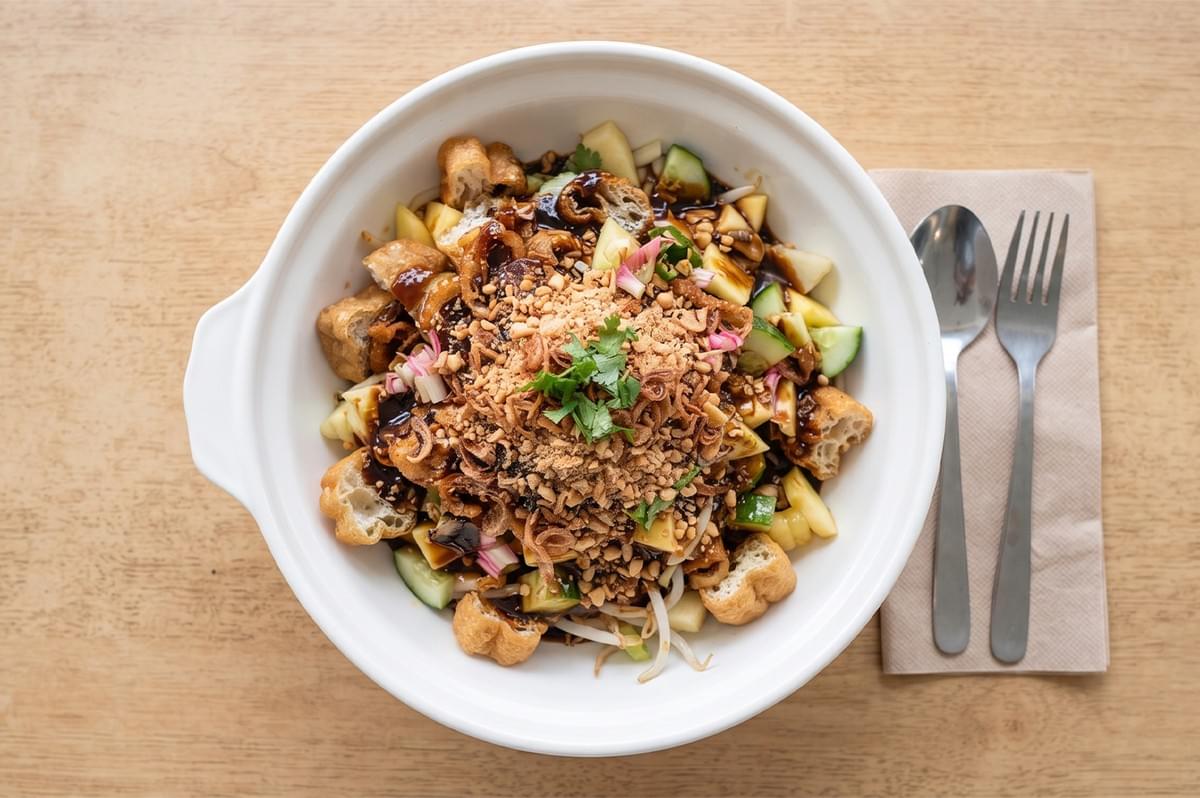
Here is the thing about the word itself. "Rojak" in Malay roughly means a mix, a mishmash, a bit of everything thrown together.
We use it that way in everyday talk too. A messy situation? Rojak. A group of friends from all over the place? Also rojak. The word carries no shame in it. It just means many things living in one bowl.
So when people call Singapore a rojak society, they are not being rude. They are being honest. We are a mix, and we are better for it.
A plate of chinese rojak Singapore style holds Chinese ingredients, Malay prawn paste, Indian influences, all tossed into one bowl that nobody owns and everybody claims. I never thought about this much as a kid. I just ate it. But the older I get, the more the dish feels like a quiet little portrait of where I come from.
The Hawker Craft Behind the Bowl at Famous Rojak Stalls
People think rojak is easy because there is no cooking, really. Just mixing.
But stand and watch a good hawker for a while. You will see how wrong that is.
Balance Is Everything in the Rojak Sauce
The auntie I mentioned never measured anything. She knew, by feel, how much sugar to cut the funk of the prawn paste. How much lime to lift it. How much chilli before it became too much.
Too sweet and it turns sticky and cloying. Too sour and your face scrunches up. Too little sauce and the whole thing tastes of nothing. The balance lives in her hands, built over years of tasting and adjusting.
Freshness and Timing at Albert Centre and Other Food Centres
The fruits and vegetables have to be cut fresh, or they weep and go soft. The fried fritters get a quick toast so they stay crispy before they meet the sauce. The peanuts go on last so they do not turn soggy.
Hawker rojak is tossed to order for a reason. Sit too long and it sweats. The magic is in eating it right after she hands it to you, while the textures still fight each other a little.
Chinese Rojak, Indian Rojak, and the Variations at Rojak Stalls
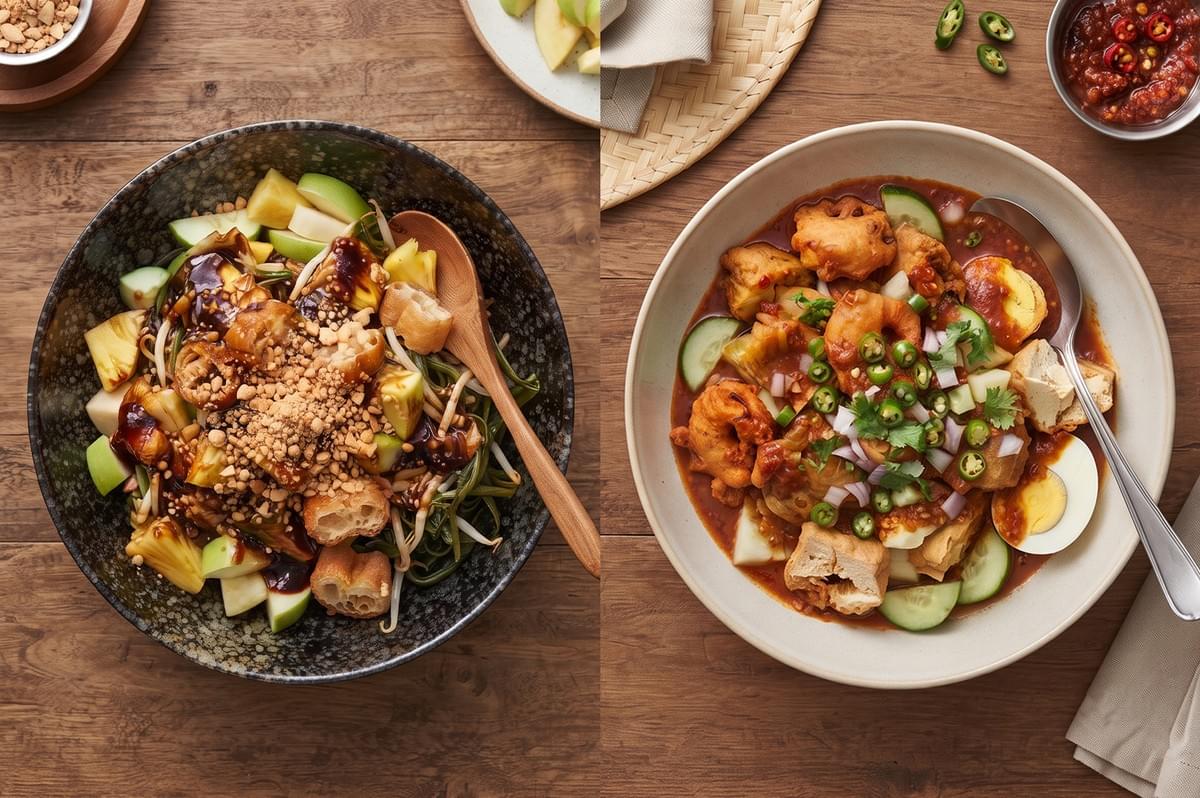
Now, not all rojak is the same plate. This confuses people, and fair enough.
What I have been describing is mostly chinese rojak. That dark, funky version built on the prawn paste sauce, with fruits like pineapple, rose apples, cucumber, and turnip, plus tau pok, fried dough fritters, bean sprouts, and sometimes century egg or prawn crackers for a chewy, briny bite. This is the one that smells like the sea and tastes like memory.
Indian rojak is a different animal altogether. You pick from a spread of fried fritters, deep fried dough fritters, prawn cakes, boiled potato, eggs, all dunked into a thick, orange, slightly sweet and spicy peanut dressing. It is heartier, more of a meal, and the dipping is half the fun.
Then there are fruit rojak versions and regional cousins, sometimes called rojak buah, leaning into the fruit and that sweet, spicy dressing. Less of one fixed recipe, more of a family of dishes.
I am not here to tell you which one is correct. That misses the point. They grew from different kitchens, different hands, different homes. They are all rojak, and they are all ours.
The Rojak Sauce That Holds It Together
If rojak has a soul, it lives in the sauce.
For the prawn paste rojak I love, it starts with hae ko, that thick, dark, almost black shrimp paste. On its own it smells confronting, strong and fermented and not exactly polite.
But then comes the tamarind for sourness. Sugar to round it. Chilli for the slow burn. A squeeze of lime juice to wake it all up. The hawker works these together until the funk softens into something deep and savoury, sweet and tangy in the same breath.
Then the crushed roasted peanuts, ground a little coarse, going over the top. They add that nutty warmth and a texture that makes you reach for the next piece.
Nobody can quite agree on the exact ratios, and I think that is right. Every sauce is a small signature, made by the same hands every day for years.
Famous Rojak Stalls in Singapore to Try
Some rojak stalls are famous for their special home made sauce and balance of flavours.
Lau Hong Ser Rojak is a second generation stall with a queue time of up to one hour, known for charcoal-grilled you tiao and tau pok, and house-made chilli paste.
Brothers Rojak offers a balanced sauce with hits of prawn paste, torch ginger flowers, and a zing from squeezed lime. Their bite size portions are perfect for sharing.
Singapore Famous Rojak at Albert Centre, located at 270 Queen Street, is featured in the Michelin Guide and serves a plate heaping with chopped vegetables, fruits, and crispy fried fritters tossed in their special home made rojak sauce.
Toa Payoh’s Soon Heng Rojak is well-loved for its crunchy fried fritters and generous sprinkle of peanuts.
Balestier Road Hoover Rojak, a Michelin Bib Gourmand recipient, has been around since 1961 and features century egg and jellyfish alongside the usual ingredients.
Why Rojak Still Feels So Local in Singapore
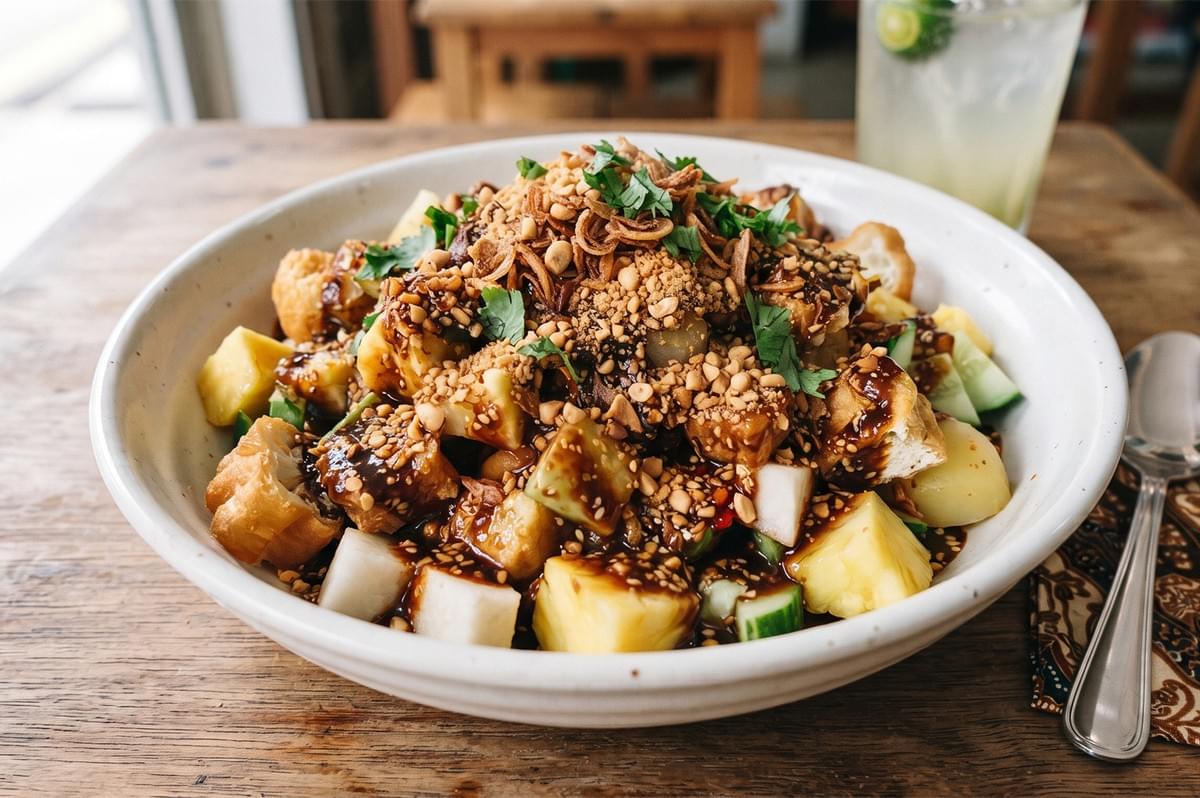
I could eat fancier things. We all can, these days.
But rojak keeps pulling me back to old food centres and the corner stalls of my childhood. It does not photograph well. It does not trend. It just sits there, dark and humble, smelling of prawn paste and toasted nuts.
And confirm, it brings back memories. After school. After a long day. Sharing one plate with someone, fighting over the last piece of you tiao.
That is Singapore food culture to me. Not the shiny restaurants, though those have their place too. It is the unglamorous dishes that quietly hold our history. The ones made by hawkers who never asked to be heroes, but feed us like they are.
Go Find Your Plate of the Best Rojak in Singapore
So here is my small invitation.
This week, walk past the new cafes and the queues for whatever is popular right now. Find an older hawker centre instead. Look for the rojak stall with the auntie or uncle who has been there longer than you can remember.
Order one plate of the famous rojak tossed with that special home made sauce. Watch them toss it. Eat it while it is fresh, before it sweats, peanuts and all.
Sit for a while after. Let the sweet, spicy, sour settle. Then maybe order kopi and stay a little longer.
Support these rojak stalls while they are still here. The dish costs a few dollars, but what it holds is worth far more. And if it stirs something in you, the way that first plate stirred something in me, come back and tell me about it. I would like to hear.
To start and find your traditional plate, be sure to visit Taste our Tradition for more currated list of hawker dishes and restaurants.
