
Watch someone assemble a popiah and you will understand why I could stand at a stall for ages, just looking. The popiah skin goes down first, pale and delicate, almost see-through, made from wheat flour mixed with water to form a thin layer of dough.
A quick swipe of sweet sauce, a smear of chilli paste, a scatter of minced garlic, then fresh lettuce leaves and crunchy bits like chopped peanuts and bean sprouts. Next comes a spoonful of soft, savoury The filling commonly centres on stewed jicama or turnip, with ingredients such as carrots, beansprouts, egg, peanuts and lettuce. Depending on the style, pork, Chinese sausage, prawns or crab meat may also be added. This delicate balance showcases the impressive culinary skills required to assemble a perfect hokkien popiah.
We often treat popiah as just a light snack, something to order while waiting for the main dishes like mee siam or a bowl of fragrant rice. But the more I think about it, the more I believe that this spring roll holds a lot more than filling. It carries history, family recipe handed down from Fujian Province in China, and a whole way of eating together.
Where Popiah Comes From: Traditional Recipe Passed from Fujian Province
Popiah is believed to have southeastern Chinese roots, tracing back to Fujian Province in China. It grew out of the spring roll tradition, and the story goes that it was eaten during spring, when vegetables were in abundance. That connection to the season feels fitting, because a good popiah really is a celebration of fresh, cooked vegetables wrapped in something soft.
The word itself is telling. "Popiah" means "thin pancake" in Teochew, which points to the star of the show: that paper-like popiah skin made from wheat flour. As Chinese food communities moved across Asia, the roll travelled with them, picking up other ingredients along the way.
How It Landed in Singapore: The Popiah Fix in Our City Hawker Food Hunt
In Singapore, the dish became closely associated with Hokkien and Teochew communities and eventually became a familiar part of local food culture. These communities brought the dish with them, and over time it became a familiar sight in our hawker centres, coffee shops, and homes.
You will often find it sold alongside kueh pie tee, that pretty little cup-shaped cousin that uses much of the same popiah filling. Popiah slotted easily into our food culture, comfortable as a snack, an appetiser, or part of a bigger spread including fresh salads.
The Secret Is in the Skin: Ann Chin Popiah and the Art of the Hot Pan
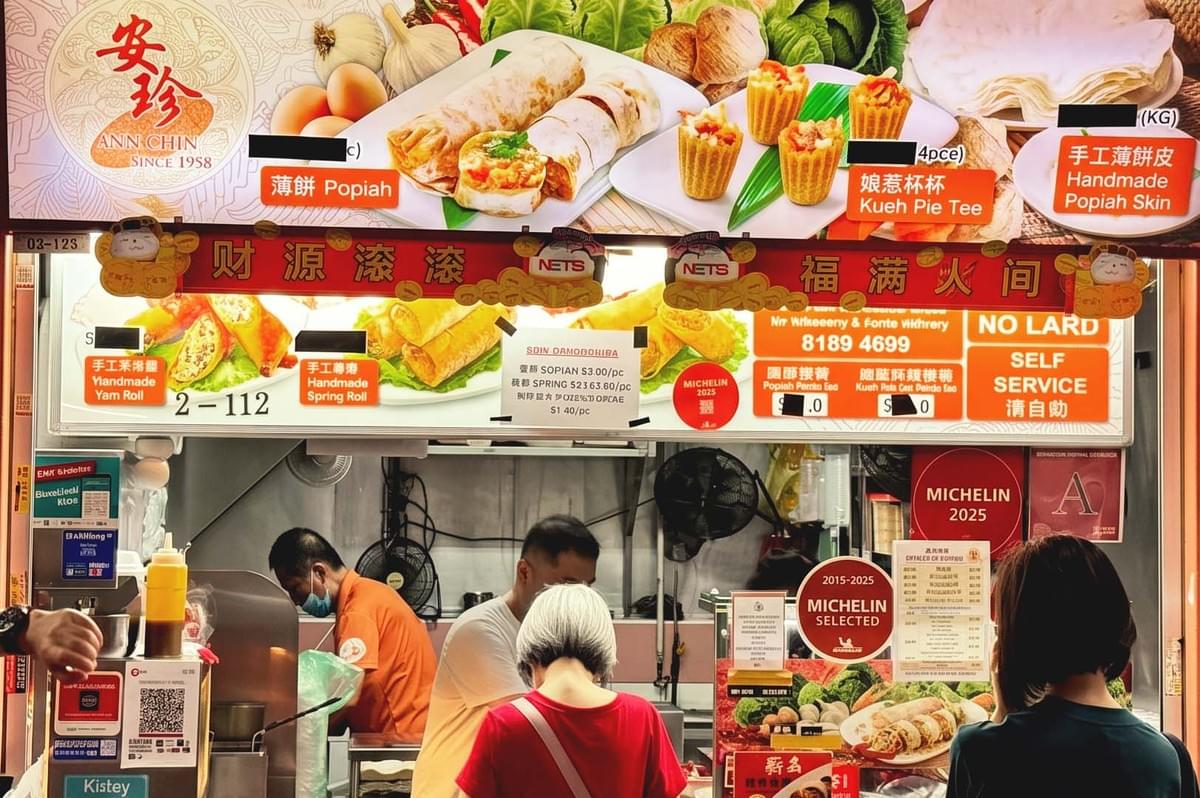
If you ask me, the soul of a good popiah is its skin. It should be paper-thin, yet chewy and resilient enough to hold a generous filling without tearing. That balance is not easy to get.
Ann Chin Popiah, who now operates multiple outlets across Singapore, is famous for their handmade popiah skin, which is crafted fresh on a hot pan daily. Traditional popiah skin is typically made with wheat flour, water, oil and salt, worked into an elastic dough before being swept across a hot griddle. Then comes the part that always amazes me: a ball of that sticky dough is swiped across a hot pan in a quick, confident motion, leaving behind only the thinnest layer.
It cooks in seconds, and then it has to be peeled off cleanly, without breaking. Do it wrong and you get holes or thick patches. Do it right and you get that lovely translucent round that can hold all the fillings tightly wrapped inside.
This is genuinely hard work, and it is why hand-made skin is so treasured. Many people now reach for frozen skins from the supermarket, which are convenient and perfectly decent. But there is something about a fresh, hand-made wrapper that you can feel in every bite, especially when the skill is demonstrated mid air with such precision.
A Filling Built in Layers: The Good Chance Popiah Combination
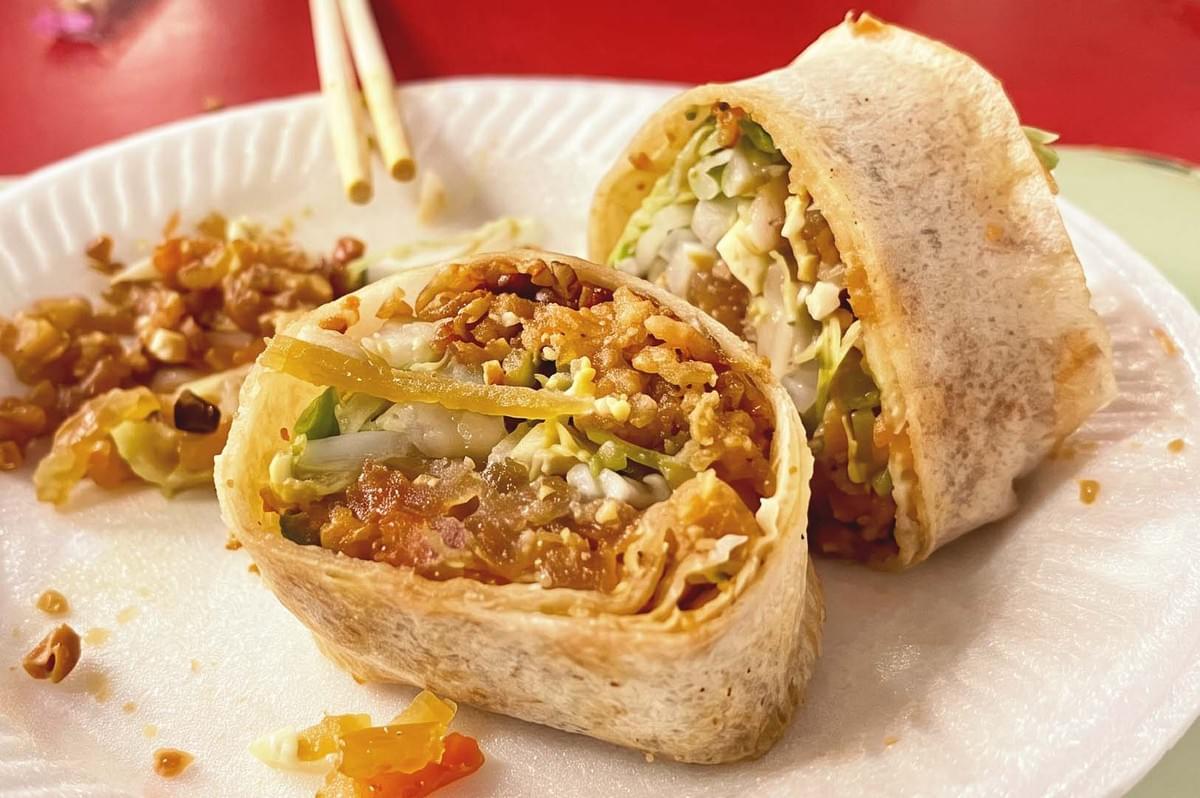
Part of what makes popiah so satisfying is the play of textures. Nothing here is one-note. The base is often a soft, braised mix of shredded jicama (a type of turnip) and bamboo shoots, cooked down until tender and sweet. Around that, you get contrast from all sides.
Depending on whether it follows a Hokkien, Peranakan or family-specific recipe, a popiah may include:
- Bean sprouts and lettuce leaves for crunch and freshness
- Slices of hard boiled egg or omelette
- Cucumber and carrot, cut thin
- Roasted chopped peanuts for a nutty bite
- Prawns, crab meat, and Chinese sausages for savoury depth
- Pork or roast chicken, adding richness to the whole dish
Tying it together are the sauces: a layer of sweet sauce, a hit of chilli paste, and fragrant minced garlic. When you get the proportions right, one popiah manages to taste sweet, spicy, savoury, and hearty all at the same time. Get it wrong and it turns soggy or slightly bland, so balance really is everything.
Good Chance’s current DIY popiah set comes with popiah skin, sweet sauce, chilli paste, garlic, peanuts, coriander, lettuce, beansprouts and hard-boiled egg. Diners can add extras such as sliced prawns, crab meat or Chinese sausage.
The Joy of Popiah Parties and DIY Popiah: Making Your Own Popiah Roll at the Table
One of my favourite things about popiah is that it does not have to be a solo affair. The DIY popiah party is a much-loved tradition, where the skins and all the different fillings are laid out on the table, and everyone builds their own roll.
I think this is where popiah really shows its heart. You spread your own sweet sauce, decide how much chilli paste you can handle, pile on your favourite bits like crunchy bits, bean sprouts, egg, and other ingredients, and then wrestle with folding it without everything spilling out. There is laughter, a bit of friendly teasing when someone overfills theirs, and a lovely, relaxed rhythm to the whole meal. It turns eating into an activity, something you do together rather than just consume. Can you think of many other dishes that pull a family around one table like that?
The Makers Keeping the Craft Alive: Cosy Corner and Family Recipe Handed Down
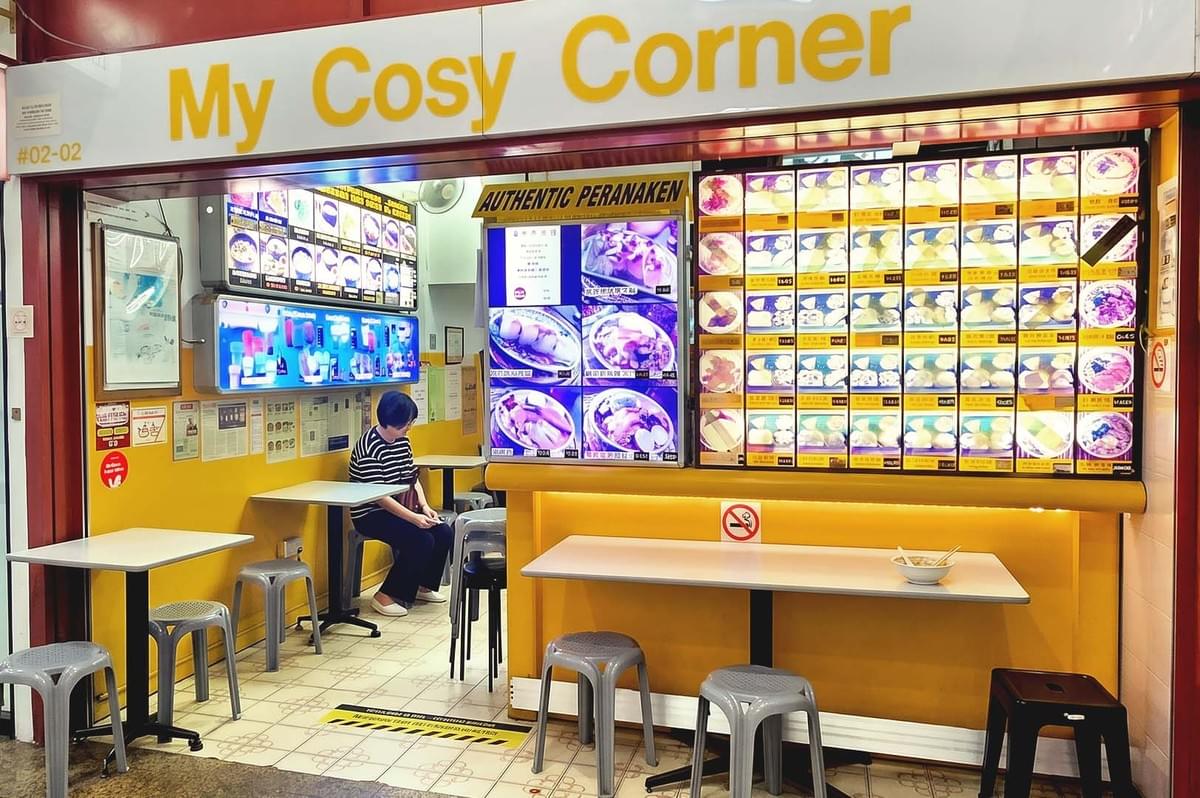
Behind every good popiah is someone who knows how to make that skin, and those hands are getting rarer. Heritage businesses matter here. Cosy Corner has served its popiah at Coronation Plaza since 1988, using a family recipe associated with the late cookbook author Leong Yee Soo. They specialize in popiah with a good balance of soft and crunchy bits, paired with their own chilli paste and sweet sauce.
Making popiah has long been a family effort, with different members taking on different roles, and that passing down of skill from one generation to the next is precisely what keeps the craft breathing. Popiah has also carried cultural weight beyond the everyday snack, appearing as an offering in ancestral worship and eaten during the Qing Ming Festival.
Old Roots, New Twists: Ann Chin and Other Innovators
The dish is evolving too, and I do not think that is a bad thing. Ann Chin, a well-known name in Singapore's popiah scene, continues to innovate while respecting tradition. Their sesame chicken popiah offers a modern twist with tender slices of roast chicken, juicy vegetables, and a creamy white sesame sauce wrapped in their signature popiah skin.
Restaurants and hawker stalls have also played with modern takes, including a memorable deep fried spring roll version that adds a crispy texture to the traditional recipe. Community groups and heritage organisations have worked to teach the public how popiah is made, through festivals, workshops, and demonstrations. When done thoughtfully, these new versions and efforts introduce the dish to younger folks without erasing its roots.
Why It Is Worth Holding On To: The Popiah Roll as a Living Tradition
The honest challenge is that hand-making popiah skin is slow, tiring work, and not many young people are rushing to take it up. If we are not careful, that skill could quietly fade. And when it does, we lose more than a snack. We lose a small piece of who we are, wrapped up in every roll.
So here is my gentle ask. The next time you are near a business that still makes its popiah skin by hand, such as Ann Chin Popiah or Kway Guan Huat Joo Chiat Popiah, buy a few and taste the difference. Better yet, gather your family for a proper popiah party, sauces and fillings all laid out, and let everyone make a mess of their own. And if popiah holds a memory for you, share it with someone. That is how a thin little skin keeps holding generations together, lah.
P.S. Keep an eye on the latest food news to discover new popiah stalls or seasonal specials, and always check the opening hours before you visit. And if you happen to meet an enthusiastic young helper like Ah Boy at your local hawker centre, don’t hesitate to ask for tips on wrapping the perfect roll!
Discover more traditional dishes across Singapore landscape by visiting this article: A Lunch Break at Telok Ayer Food
