
He just ladled the braise over a bowl of broad rice sheets, pushed it across the counter, and went back to his large pot.
I remember the smell first. That dark, warm, slightly medicinal cloud of soy sauce, dark soy sauce, light soy sauce, star anise, and spice that seems to soak into your clothes. Then the taste. Peppery, savoury, a little sweet with hints of brown sugar and dang gui, with a depth that felt older than me. I was maybe ten. I've been chasing that piping hot bowl ever since.
So, What Exactly Is Kway Chap? A Look at Kway Chap Ingredients and Presentation
If you've never had kway chap, it can look a bit confusing at first. It comes in two parts, and that's part of the charm.
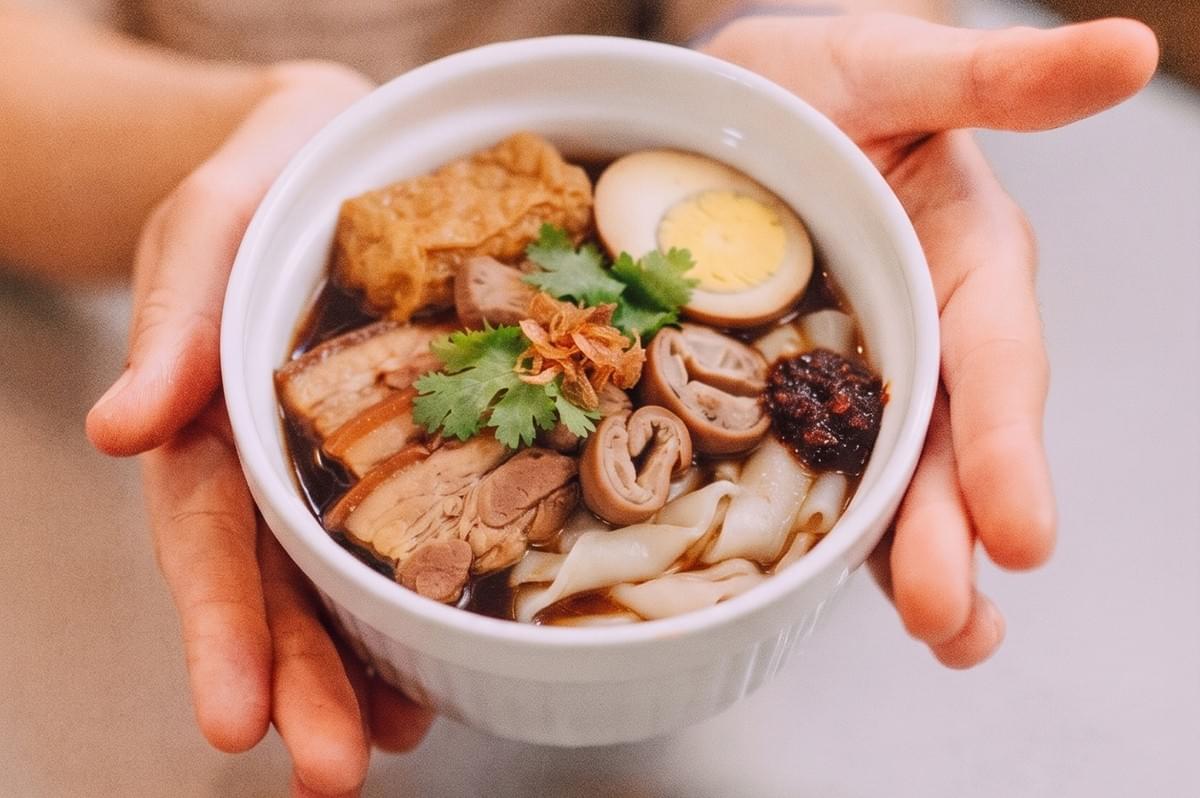
On one side, you get the kway: broad, silky smooth rice noodles or broad rice sheets swimming in a light soy broth sometimes made with rice milk. Soft, slippery, comforting in a way that's hard to explain. On the other side sits the good stuff, the braised platter.
That kway chap platter usually holds a mix of:
- Braised pork belly, fatty and tender
- Braised pig's skin and pork skin, gelatinous and chewy
- Large intestines and small intestines, the chewy heart of the dish
- Tau pok soaking up all that gravy
- Braised tofu, soft and dark
- Braised eggs, rich and firm
- Fish cake and pig's stomach, depending on the stall
- Braised duck or duck meat, especially in stalls like Guan Kee Kway Chap or Lao San Kway Chap
- Preserved salted vegetables or salted vegetables adding a crunchy contrast
You dip, you spoon, you mix. The innards and other ingredients are often served separately from the kway and broth, allowing you to customize each bite. That freedom is half the fun.
The Braise Is Everything: Secrets from Most Kway Chap Stalls
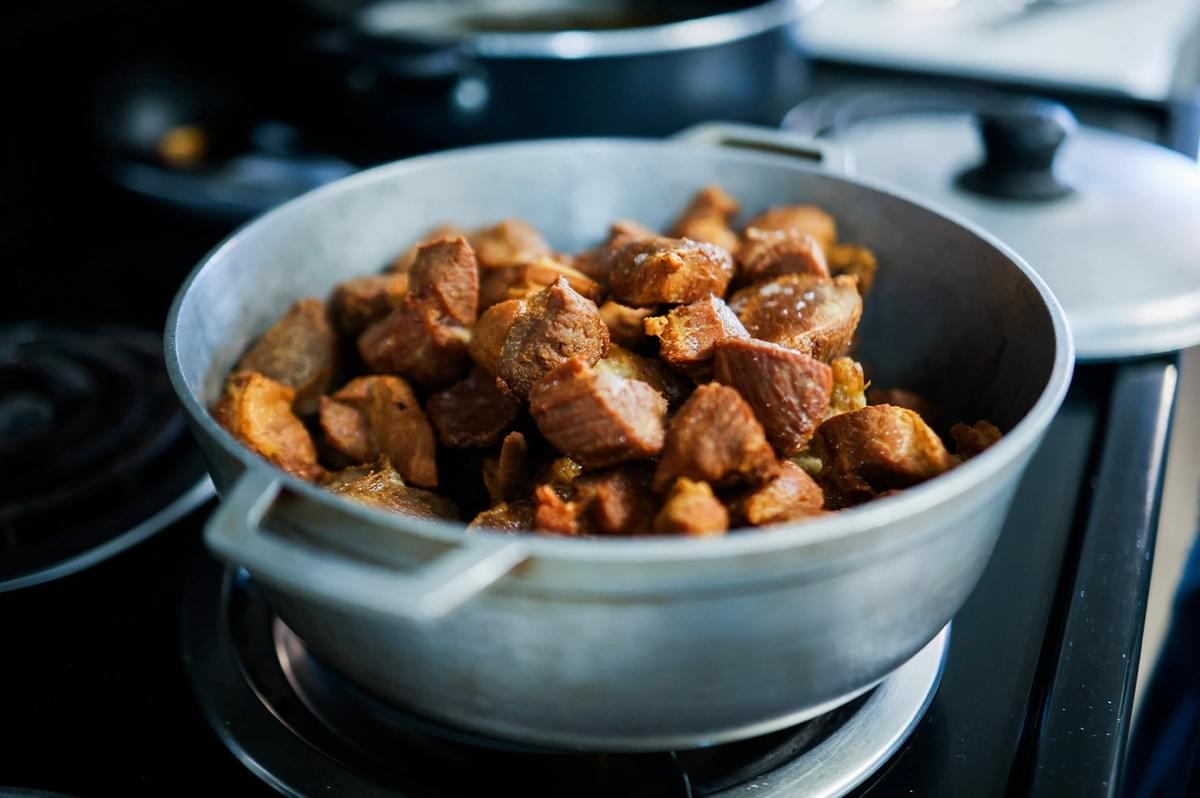
Here's the thing about kway chap. The ingredients matter, but the braise is the soul.
A good braising liquid, or lor, is built over hours and often topped up day after day in a large pot. Star anise, cinnamon, cloves, garlic, ginger, dark soy sauce, light soy sauce, salt, and that quiet herbal warmth from dang gui linger in the broth. Some chap stalls guard their recipes like family secrets, and honestly, I get it. When the braise is right, everything else falls into place.
You can tell within one spoonful. The colour should be deep, almost black, but the taste shouldn't be salty and flat. It should be layered. Savoury first, then a slow peppery heat, then a hint of sweetness that keeps you going back.
When a stall like Garden Street Kway Chap or Lao San Kway Chap gets this balance right, it's steady. Confirm plus chop, you'll be back next week.
It's All About the Textures: From Silky Smooth Kway to Braised Innards
What keeps me coming back isn't just flavour. It's the way everything feels in one mouthful.
The kway is soft and silky smooth. The braised pork belly practically melts. The intestines have that gentle chew, springy but not tough when done properly. Tau pok is spongy and drenched. The braised egg is firm and rich. Fried shallots or shallot oil sprinkled on top add a fragrant crunch. Put them together with a spoon of chilli, and you get this back-and-forth of textures that never gets boring.
That contrast is the whole point. Soft against chewy. Light broth against heavy braise. It's simple food, but it's clever in its own quiet way.
The Chilli Ritual at Most Kway Chap Stalls
I can't talk about kway chap without mentioning the chilli. That small saucer of tangy, garlicky chilli sauce is not optional in my book. A little dip on the pork meat or braised duck, a swirl into the broth, and suddenly the whole bowl wakes up.
If you eat kway chap without the chilli, we can still be friends, but I'll be worried about you. The chilli's acidity cuts through the richness of the braised pork belly and pork bones, while its heat complements the peppery notes of the broth. Most stalls prepare their own unique chilli recipes, often incorporating vinegar and garlic to enhance the flavours.
At roadside stalls and hawker centres alike, this fiery condiment is the perfect companion to the stewed meats and silky kway. Whether paired with braised duck rice or yam rice, the chilli elevates every bite, making it an indispensable part of the kway chap experience.
The Offal Question: Pig's Organ Soup and Braised Innards in Kuey Chap
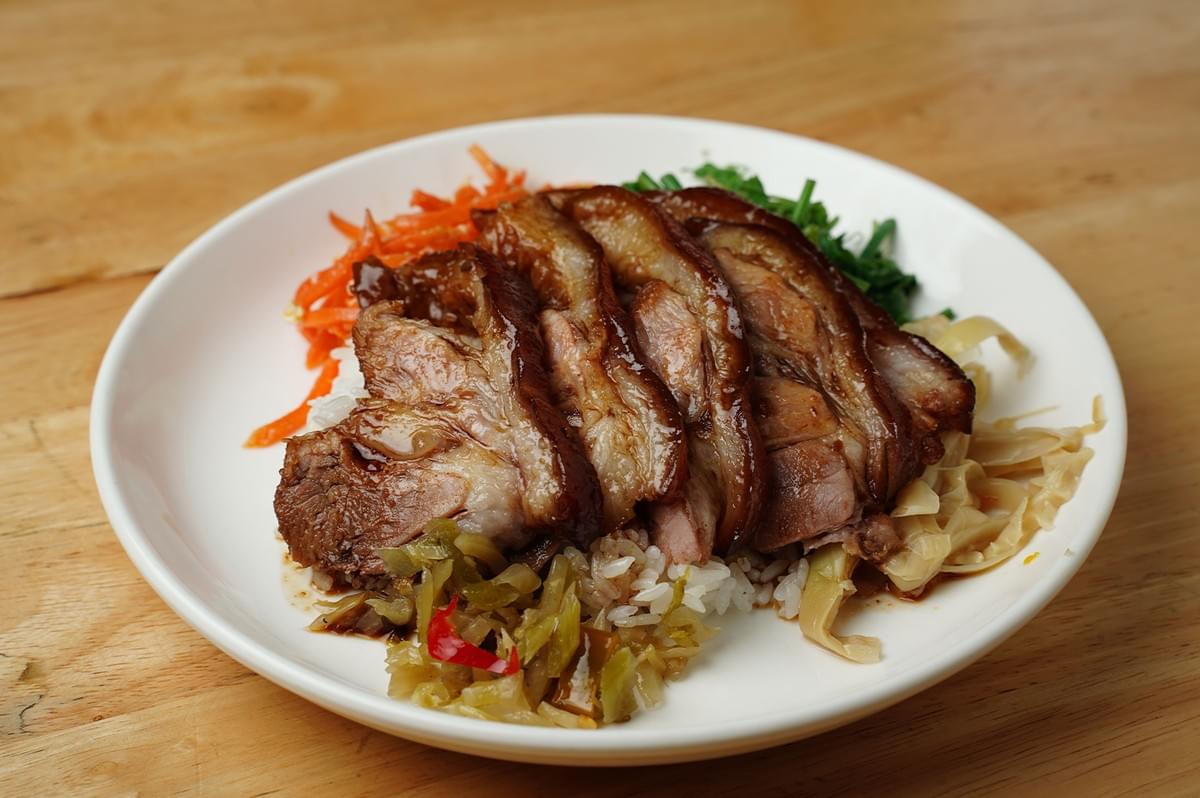
Let's be honest. Kway chap scares some people off, and it usually comes down to the offal.
I understand it. Pig's organ soup and braised innards like pig's stomach, large intestines, and small intestines aren't the easiest sell, especially for folks who grew up on cleaner-looking plates. The first bite can feel like a dare. But for many of us, those same ingredients taste like childhood. Like weekend breakfasts with family. Like the aunties and uncles who taught us that nothing goes to waste.
For every person who wrinkles their nose, there's someone else who orders extra intestines without blinking. That split is part of what makes kway chap special. It's not trying to please everyone. It just is what it is.
If you're nervous, my advice is easy. Start with the braised pork belly and tau pok. Ease your way in. One day you'll be reaching for the large intestines yourself, wondering what took you so long.
Teochew Roots and the No-Waste Way of Chap Stalls in Singapore
Kway chap carries a lot of history in that dark broth. It comes from Teochew tradition, brought over by immigrants who cooked with what they had and wasted nothing.
That nose-to-tail thinking wasn't a trend back then. It was survival, respect, and good sense all rolled into one. Every part of the pig had a place. Every cut had a purpose. When you eat a bowl today, especially at iconic places like Guan Kee Kway Chap in Toa Payoh or Lao San Kway Chap at Ang Mo Kio, you're tasting that resourcefulness, that quiet care that turned humble ingredients into something people queue for.
There's something grounding about that. In a city that changes so fast, kway chap still tastes like where we came from.
The Hawker Centre Mood: Zion Riverside Food Centre, Cheng San Market, and More
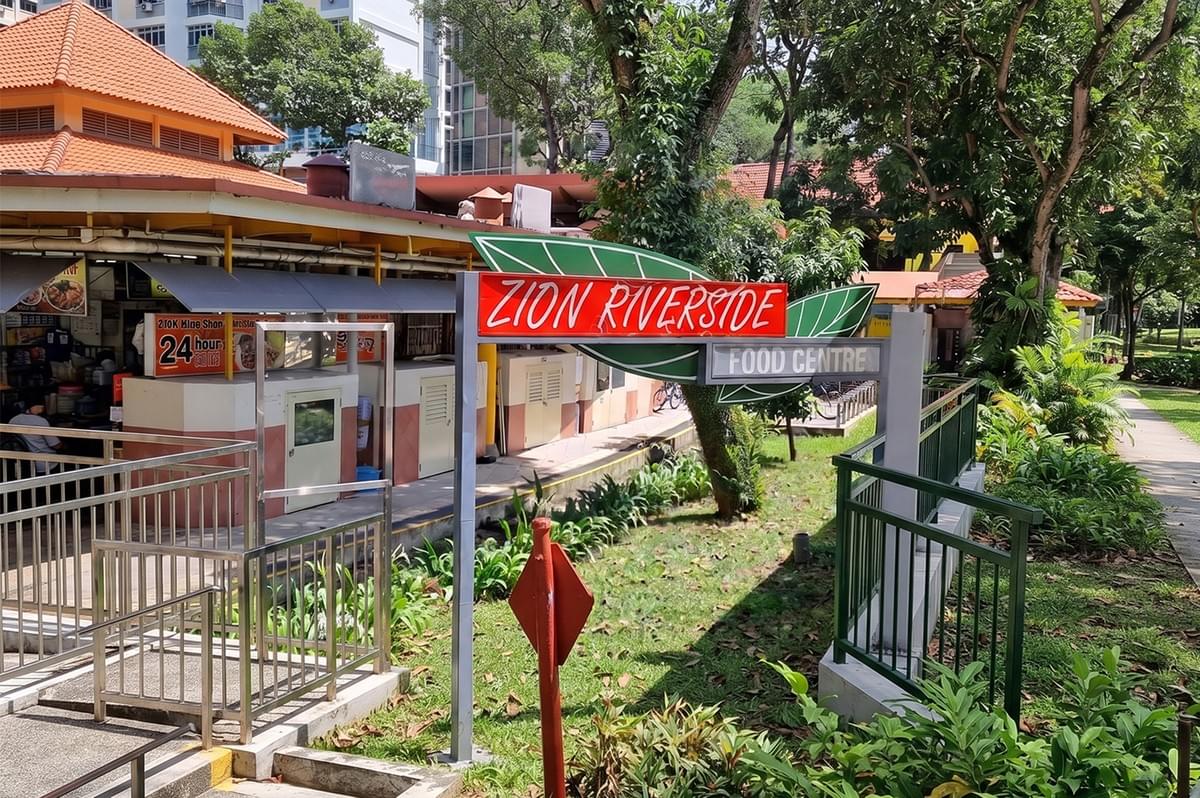
Half the joy of kway chap lives in where you eat it.
I love the old-school food centres and hawker centres. The steel pots stained dark from years of braising. The handwritten signs. The uncle or auntie who's been doing this longer than I've been alive. You show up in the morning or the early afternoon, join the queue, and wait your turn. Regulars nod at each other. Nobody's rushing.
The sounds settle into you. Ladles knocking against pots. Trays sliding across tables. The low hum of people eating and talking. A ceiling fan working overtime. It's not fancy. It's not trying to be. And that's exactly why it feels like home.
Some of the best chap stalls are found at Airport Road Food Centre, Serangoon Garden Market, Garden Street Kway Chap, and Kio Avenue. Each has its own unique broth and selection of kway chap ingredients.
Why Kway Chap Still Matters in Singapore's Food Scene
Our food scene keeps growing. New cafes, fusion spots, trendy openings every other week. I enjoy a lot of it, honestly. But kway chap reminds me why I fell in love with local food in the first place.
It's not photogenic in the usual way. It doesn't chase attention. It just sits there, dark and honest, doing what it's always done. Feeding people. Holding memories. Keeping a tradition alive one bowl at a time.
The worry is real, though. Many of these chap stalls are run by older hawkers, and not every child wants to inherit the pot. Some recipes will quietly disappear when the uncle finally hangs up his ladle. That thought stays with me every time I finish a bowl.
Go Get Your Bowl: Visit Guan Kee Kway Chap, Lao San Kway Chap, or Garden Street Kway Chap
So here's my simple ask. The next time you're wondering what to eat, skip the usual and go find kway chap. Return to that stall you've been meaning to visit again, whether it's Guan Kee Kway Chap in Toa Payoh, Lao San Kway Chap at Ang Mo Kio, or Garden Street Kway Chap at Serangoon Garden Market. Support the old-timers still stirring their pots at dawn.
And if you know someone who's never tried it, bring them along. Start them slow, hand them the chilli, and watch them figure out why so many of us love this dish.
Some meals feed you and disappear. Kway chap stays with you. That, to me, is shiok in the truest sense.
If you're looking for a place to eat traditional cuisine in Singapore, we highly recommend visiting and clicking our article here.
