
Last Updated Date: October 06, 2026
There is a moment, just before the bowl lands on your table, when you smell it before you see it. That deep, spicy hit of a flavourful curry, warm with turmeric and dried chillies, softened by something almost sweet like tamarind paste and coconut milk. Then the fish head arrives, half-submerged in bright orange gravy, cheeks glistening, okra and tomatoes bobbing around it.
The whole table leans in. Someone grabs the ladle. And for the next twenty minutes, nobody talks much, because we are all busy digging out cheeks, mopping up sauce with steamed rice or white rice, and quietly agreeing that this, right here, is great food.
I have eaten fish head curry more times than I can count, but it was only recently that I stopped to ask myself a simple question. Where did this dish actually come from? Does this curry carry a long history of cultural harmony, the same way Japanese curry in Singapore has?
The answer, it turns out, is a fantastic recipe about migration, clever cooking, and two communities meeting over a bubbling pot.
Fish Head Curry and Curry Powder Origins
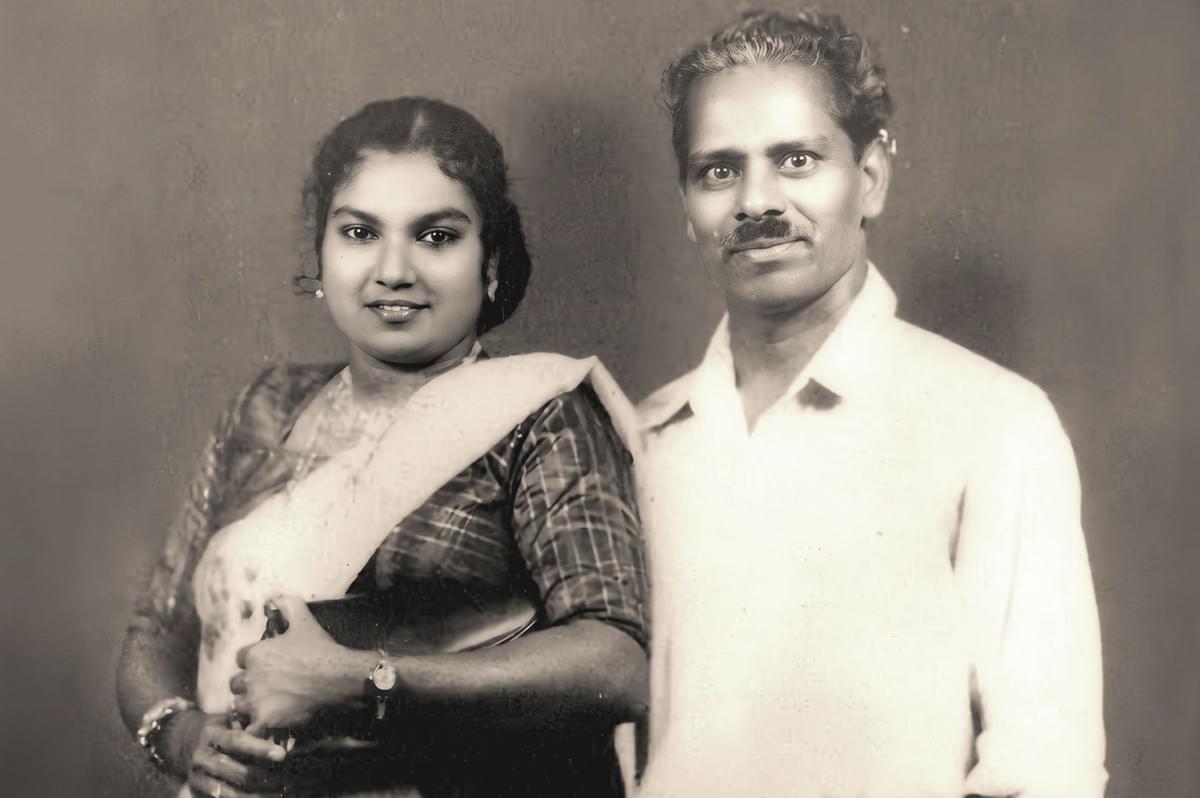
The story most people point to begins in 1949, at a humble stall on Sophia Road. The man behind it was an Indian immigrant named Marian Jacob Gomez, better known simply as M.J. Gomez. He had come to Singapore from Trivandrum, the capital of Kerala, in southern India.
Here is where I have to be honest with you, because the details are not perfectly clean. Different sources tell the arrival slightly differently. Some accounts say Gomez landed here in the 1930s, while a 1979 New York Times feature placed his arrival back in 1928.
His departure year gets muddled too, cited as either 1961 or 1964. This is what happens when a legend grows faster than the paperwork. The man himself left few records, and for years, people were not even sure what the initials "M.J." stood for.
What most accounts do agree on is this. Gomez set up shop, first on Sophia Road, and his eatery, Gomez Curry, later moved to nearby Selegie Road. And there, he did something quietly brilliant with his curry powder mix and spices.
When South Indian Fish Curry Met Chinese Customers
Back in Kerala, fish curry is an everyday thing. What is not so common there is making the fish head the star of the show. Gomez noticed something about his Chinese customers here. The Chinese community prized the fish head.
To them, the cheeks and the collar were the sweetest, most tender parts of the fish, the bits worth fighting over. Meanwhile, fishmongers often treated the raw head as a throwaway, something of low value.
So Gomez put two and two together. He took the rich, spice-heavy South Indian fish curry tradition and built it around the fish head, an ingredient that Chinese cuisine in Singapore already treasured. He is also credited with adjusting the flavour to suit local palates, making it a touch sweeter and less fiery than a curry you might find back in India.
The result was something genuinely new. Not quite Indian, not quite Chinese, but born from the meeting of both. If you ask me, that is about as Singaporean a dish as you can get.
Kari Kepala Ikan: The Head Curry Evolution
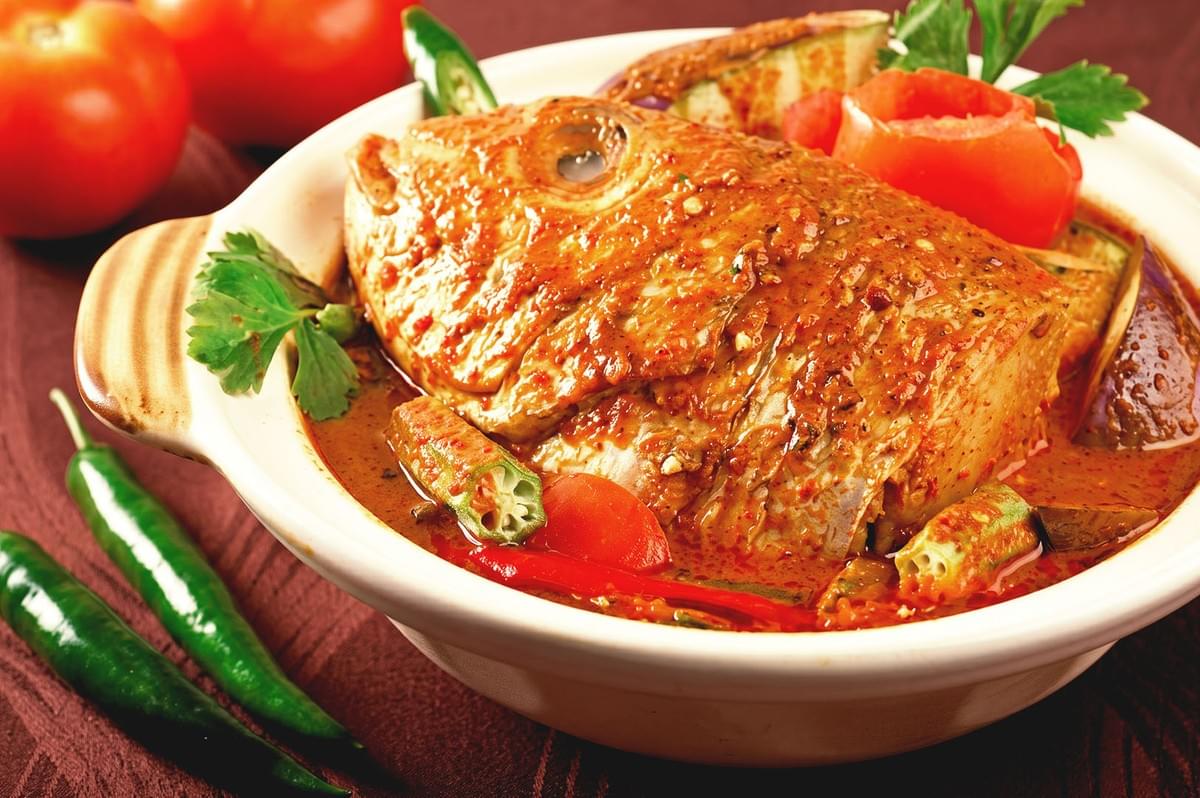
A good idea rarely stays with one person, and fish head curry was too good to keep still. By 1951, just two years after Gomez, a Chinese chef named Hoong Ah Kong was putting his own spin on it at his restaurant, Chin Wah Heng. He moderated the spices further and steamed the fish head first before adding it to the curry, a gentler approach that suited diners who wanted the flavour without the full punch.
This is the part I find most telling. The dish did not belong to any single kitchen for long. It moved between Indian and Chinese restaurants, each community adapting it, tweaking it, claiming a little piece of it. Some versions leaned tangy and sweet with the addition of sugar and pineapple. Others stayed thick and coarse, closer to Gomez's original South Indian roots.
By the 1970s and 1980s, fish head curry had become such a hit that stalls all over were advertising their own "Gomez fish head curry" or "original Gomez curry" on their signboards.
The man's name had become shorthand for the real deal, even long after he had returned to India. In a way, that is a kind of immortality lah, even if Gomez himself never lived to see it. He passed away in 1974, reportedly never knowing just how far his creation would travel.
Banana Leaf Apolo and Little India: The Shared Dish Experience
Walk down Race Course Road in Little India today and you will find a whole stretch known for fish head curry, with longstanding names like Muthu's Curry drawing crowds decade after decade. You can have it two ways, really. In the Indian style, ladled over rice on a fresh banana leaf or banana leaf apolo, with papadam on the side and the gravy soaking into everything. Or in the Chinese restaurant style, served in a big claypot at the centre of a round table, meant for sharing.
That sharing part matters. Fish head curry is not a solo dish. You do not order it for one. It arrives big, it demands a group, and it turns a meal into an event. There is an unspoken ritual to it that regulars know well. You start with the cheeks, work through the fleshier parts, and if you are brave, you go for the eye at the end. Some folks swear that is the best bit. I will let you decide that one yourself.
For me, the dish carries memories more than facts. Family dinners where the youngest cousin got told to stop hogging the gravy. Celebrations where a fish head curry meant something worth marking. It is comfort food, festive food, and heritage food all in one pot.
Why Fish Head Curry Still Holds a Place at Our Table
What keeps fish head curry a local legend is not just the taste, though the taste is reason enough. It is what the dish represents. It was created by an Indian immigrant, for Chinese customers, refined by chefs from more than one community, and passed down through generations who each made it their own. It is a small edible reminder of how much of our food, and our identity, was built by people borrowing from one another and making something better together.
So next time you catch that shiok smell of curry drifting out of a kopitiam, don’t just walk past lah. Heat vegetable oil in your pan over medium high heat, add mustard seeds and fenugreek seeds and wait until the mustard seeds begin to pop and become fragrant. Add curry leaves, garlic, ginger, and dried chillies to make a smooth paste in a small bowl. Stir in curry powder and coriander powder, then add tamarind paste, coconut milk, and a mix of vegetables like eggplant and okra.
Add fresh fish or fish head, preferably snapper for its tender flesh, and simmer gently over medium heat. Add salt to taste and let the curry boil gently, then reduce heat as needed and let the flavours meld. Let the curry rest for a few minutes before serving hot with steamed rice or white rice on a banana leaf or banana leaf apolo for an authentic Singaporean dish experience.
If you prefer a simple curry, this dish stands out among other curries for its unique combination of meat and fish flavors. While chicken is a popular curry meat, fish head curry offers a distinct experience that highlights the delicate flesh of the fish head and the bold spices that surround it.
Better yet, bring someone who has never tried it, or seek out a version from a community different from the one you usually go to. That is how a legend stays alive. Not in the history books, but at our tables. Confirm plus chop, this one sure power lah!
Discover more traditional underrated eat in Singapore through this article about 5 Underrated Eats at Orchard Plaza Food
